
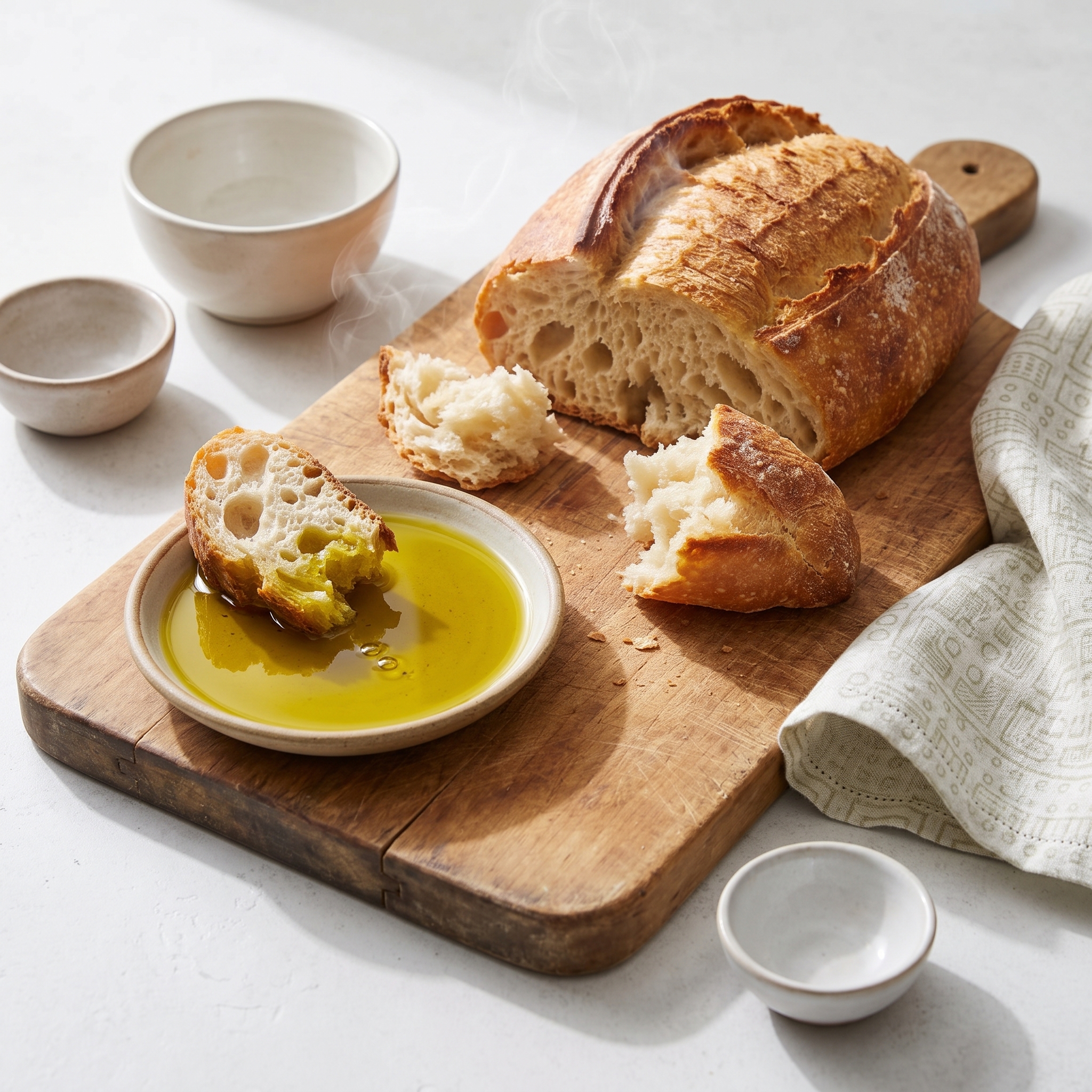
Bread is one of the few foods that shows up, in some form, at almost every table on earth. Flatbread, sourdough, roosterkoek, a baguette torn straight from the bag — different flours, different ovens, same basic idea of grain turned into something you can hold. The 16th of October marks both World Food Day and World Bread Day, an easy date to remember.
Olive oil has been bread’s companion for just as long, poured into the dough, brushed over a crust, or set out for dipping. Why bread and olive oil belong together comes down to how directly each one improves the other — the fat carries flavour the dry crumb can’t hold on its own, and the bread gives the oil something to show off on. Wilson’s Extra Virgin Olive Oil does that job in our own kitchen, in the dough and at the table both.
Here’s why the pairing works, and a few ways to put it on the table this week.
Bread and Oil, Side by Side
Long before butter was common in Mediterranean kitchens, olive oil did the job butter does in a lot of other food cultures — worked into dough, brushed over a crust before baking, drizzled over bread still warm from the oven. It wasn’t a garnish. It was the fat the kitchen had on hand, and bread was the food that carried it furthest.
South African tables have their own version of the same habit, even if it doesn’t always get called by a fancy name. A hunk of roosterkoek off the braai, torn open and doused in oil before anything else goes on it, is doing exactly what a piece of focaccia does in Liguria or a slice of pane carasau does in Sardinia.
The pairing crosses almost every culture that grows both wheat and olives, which is part of why World Food Day and World Bread Day landing on the same date feels less like a coincidence and more like the calendar catching up to something kitchens already knew.
Why Bread and Olive Oil Belong Together
Bread on its own is mostly starch and air. It needs fat to carry flavour and to stop tasting dry past the first bite, and oil does that job without masking whatever else is going on in the crumb, the way a heavier fat sometimes can.
Worked into a dough before baking, oil also changes the texture of the finished loaf. It coats some of the gluten strands as they develop, which softens the crumb and helps the loaf stay moist for longer than a lean dough made with water alone. That’s part of what gives a loaf like a no-knead olive oil bread its tender, open crumb, alongside the long, slow rise.
Poured raw over warm bread or into a dish for dipping, the oil does something different again — it’s the only way to actually taste a good extra virgin’s own character, since heat mutes a lot of that peppery, grassy flavour long before it reaches the table.
Our Tips
Dip into a shallow dish, not a deep one. A wide, shallow plate lets the bread pick up oil without needing to be fully submerged.
Add a little balsamic for contrast. A small pool of vinegar next to the oil, not mixed in, gives you a sharper bite between the richer mouthfuls.
Season the oil, not just the bread. A little flaky salt and cracked pepper stirred into the dish does more for the flavour than seasoning the loaf itself.
Warm the bread, not the oil. Bread straight from the oven or briefly reheated releases more aroma, while the oil is better served at room temperature so its own character stays intact.
Use a generous glug in the dough, not a stingy one. Skimping on the oil in a bread recipe is usually where a dry, forgettable loaf starts.
How We Serve It
A loaf of bread, a bottle of Wilson’s Extra Virgin Olive Oil and nothing else is still a proper start to a meal. Set the bread in the middle of the table, pour the oil into a shallow dish, and let people tear rather than slice.
Our Homemade Roosterkoek works the same way off the fire, oil poured straight over the bread while it’s still warm enough to soak it up. A no-knead olive oil bread, baked low and slow until the crust goes dark, is another good way to put the pairing on the table this month.
For something more filling, a plate of bread and oil sits well alongside a tomato salad or a bowl of soup, standing in for the dinner roll most tables already reach for anyway.
The Good Stuff About Extra Virgin Olive Oil
Extra virgin is the top grade an olive oil can carry. It’s extracted mechanically, without heat or chemical solvents, and it has to fall under a strict acidity threshold to earn the name. That’s what gives a good extra virgin its peppery bite and grassy edge next to a refined oil, and it’s exactly that character a raw drizzle over bread is designed to show off.
250ml / 500ml / 750ml / 1L / 5L
Bottle Sizes
Halaal & Kosher
Certification
Vegan, Vegetarian, Hindu
Dietary Suitability
Up to 2 Years
Shelf Life
Ways to Enjoy It
Add garlic and herbs to the dipping dish. Crushed garlic and a few rosemary leaves steeped briefly in the oil turn a simple dip into something closer to a starter.
Try a flavoured oil instead of plain. Wilson’s Basil or Garlic Flavoured Oil both make a good dipping oil without any extra preparation.
Brush it over flatbreads before the grill. A light coating before they hit a hot pan or braai grid crisps the edges and stops the dough sticking.
Use it to finish a bruschetta. A raw drizzle after the toast comes off the grill, not before, keeps the oil’s flavour from being toasted away.
Make it the whole point of a snack. Good bread, good oil, a little salt. Nothing else is required.
Questions You Might Have
Why do restaurants serve bread with oil instead of butter?
It’s largely a Mediterranean tradition that’s spread well beyond its region of origin. Oil carries flavour without the richness of butter, and a good extra virgin brings its own character to the table rather than just adding fat.
What’s the best bread for dipping in olive oil?
A crusty, open-crumbed loaf like a sourdough, ciabatta or a no-knead olive oil bread works best, since the open structure holds the oil rather than letting it run straight off.
Does adding oil to bread dough change the texture?
Yes. Oil softens the crumb and helps the loaf stay moist for longer than a lean dough made with just flour, water, salt and yeast.
Can I use a flavoured oil instead of plain extra virgin for dipping?
Yes, Wilson’s Basil or Garlic Flavoured Oil both work well as a dipping oil straight from the bottle, with no extra steeping required.
What is World Bread Day?
It’s an international observance marked on the 16th of October each year, celebrating bread as one of the most widely shared foods across cultures. It falls on the same date as World Food Day.
How should I store olive oil to keep it fresh for the table?
Keep it in a cool, dark place, away from the stove, and it will hold its flavour for up to two years unopened.
Where can I buy Wilson’s Extra Virgin Olive Oil?
It’s available to order directly from oliveoil.co.za and at leading retailers across South Africa.
Ready to Make This?
Get the oil that turns a plain loaf into the whole reason everyone’s at the table.
More From Our Kitchen
Homemade Roosterkoek — Spaghetti with Garlic and Extra Virgin Olive Oil — Braai Marinades That Impress — All Recipes
Made this? We’d love to see
Tag us @theoilpeopleza · #WilsonsFoods