
Most pastry technique assumes butter, cut in cold and worked quickly before it melts. Olive-oil pastry skips that whole process. The oil is already liquid, so it mixes straight into the flour with a fork, no chilling, no cutting in, no rolling pin fights. This Spring Vegetable Tart is built entirely around that shortcut.
The pastry comes together with just flour, salt, water and Wilson’s Extra Virgin Olive Oil, blind-baked until pale gold before anything else goes in.
Here’s how the whole tart comes together, from the pastry to the last vegetable on top.
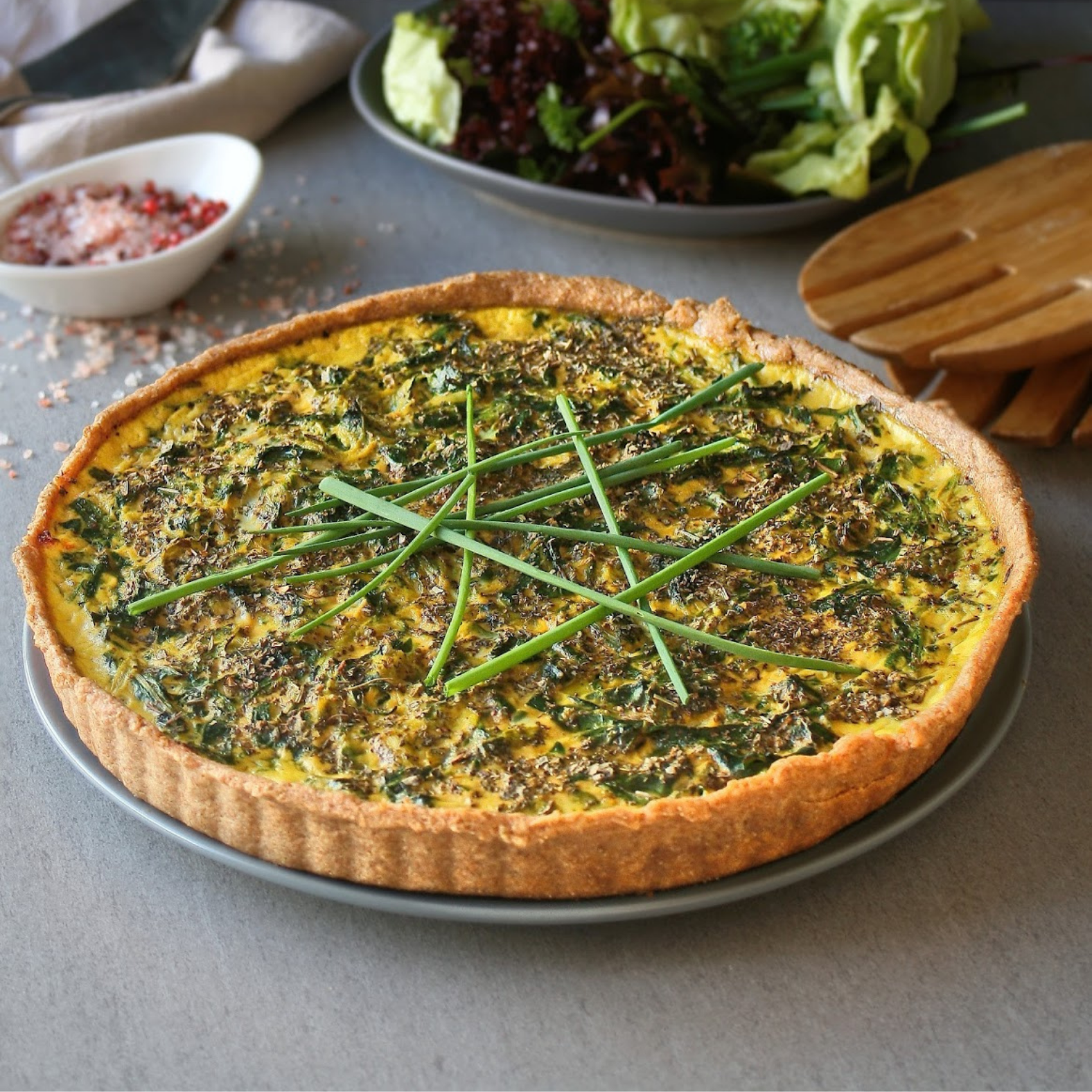
Spring Vegetable Tart
Ingredients
Method
- Make the pastry: whisk the flour and salt together in a bowl. Pour in Wilson's Extra Virgin Olive Oil and most of the water, and mix with a fork until the dough starts to come together, adding the rest of the water if it still looks dry.
- Bring the dough together with your hands into a smooth ball, wrap it, and rest in the fridge for 20 minutes.
- Preheat the oven to 200C. Roll the pastry out between two sheets of baking paper and line a 24cm tart tin, trimming the edges.
- Prick the base with a fork, line with baking paper and baking beans, and blind bake for 15 minutes. Remove the paper and beans and bake for a further 5 minutes, until pale gold.
- Reduce the oven to 180C. Whisk the ricotta, egg, lemon zest, garlic and 2 tbsp Wilson's Extra Virgin Olive Oil together, and season well.
- Spread the ricotta mixture over the base of the tart shell.
- Scatter over the peas and spring onion, then lay the asparagus spears and baby marrow ribbons on top, arranging them so they sit evenly across the surface.
- Scatter over the parmesan and a light drizzle of Wilson's Extra Virgin Olive Oil.
- Bake for 25-30 minutes, until the filling is set and the vegetables have started to colour at the edges.
- Rest for 10 minutes before slicing and serving.
Notes
We Use Extra Virgin Olive Oil
A pastry built on oil instead of butter behaves differently from the first mix. Wilson’s Extra Virgin Olive Oil coats the flour evenly as soon as it’s stirred in, which is what lets this dough come together with a fork rather than a pastry cutter.
Baked, it turns a paler gold than a butter crust and holds a light, short crumb rather than a flaky one. That crumb is sturdy enough to carry a wet ricotta filling without going soggy underneath.
The same oil goes into the filling and over the vegetables before baking, so it runs through the whole tart rather than just the base.
Our Tips
Don’t overwork the dough. Mix just until it comes together, since too much handling makes an oil pastry tough.
Blind bake properly. Fifteen minutes with baking beans, then five more without, keeps the base from turning soggy under the ricotta.
Ribbon the baby marrow thin. A vegetable peeler gives you strips that cook through in the same time as the asparagus.
Pat the ricotta dry first. Excess liquid in the cheese can thin out the filling and slow down the set.
Arrange the vegetables before baking, not after. They colour and set into the filling together, rather than sitting on top as a garnish.
Let it rest before slicing. Ten minutes out of the oven lets the filling firm up enough to cut cleanly.
How We Serve It
Warm or at room temperature, cut into wedges, with nothing more than a green salad alongside. It travels well too, so it holds up for a picnic or a packed lunch the next day.
For a bigger spread, put it out alongside cured meats and olives and let people help themselves to a slice.
A final grind of black pepper over each slice at the table finishes it properly.
More Ways to Use Extra Virgin Olive Oil
Once the bottle of Wilson’s Extra Virgin Olive Oil is open, it doesn’t stop at pastry.
For fresh-baked bread — it goes into the dough and the drizzle on top in our Three Flavour Focaccia.
For a Mediterranean spread — it dresses everything from tomatoes to olives in our Mediterranean Summer Salad.
For a crisp jacket potato skin — a rub before baking gets the same result it does here, shown in our 4 Brilliant Jacket Potato Fillings.
For a plate that travels well — it finishes the biltong and mozzarella in our Biltong and Caprese Salad.
The Good Stuff About Extra Virgin Olive Oil
Extra virgin is the top grade an olive oil can carry: mechanically extracted without heat or chemical solvents, with acidity kept below the threshold that defines the grade. That’s what gives it the grassy, slightly peppery character that comes through in a pastry built with nothing else to hide behind.
Halaal & Kosher
Certified
Vegan & Vegetarian
Suitable For
250ml, 500ml, 750ml, 1L, 5L
Bottle Sizes
2 Years Unopened
Shelf Life
Ways to Change It Up
Swap the ricotta. A soft goat’s cheese gives the filling more tang if that’s what you prefer.
Go dairy-free. A firm silken tofu blended with lemon and garlic stands in for the ricotta well.
Add broad beans. Podded and blanched, they sit well alongside the peas and asparagus.
Make it individual. Divide the pastry between small tart tins for single portions at a lunch or picnic.
Finish with fresh herbs. A scatter of dill or chives just before serving lifts the whole tart.
Questions You Might Have
Why use olive oil instead of butter in the pastry?
Oil mixes straight into the flour without needing to be cold or cut in, which makes the dough quicker to put together and easier to work with.
Can I make the pastry ahead of time?
Yes. Wrap it and keep it in the fridge for up to a day, or blind bake the shell and leave it in the tin overnight.
What vegetables work best for this tart?
Asparagus, peas, spring onion and baby marrow all cook at roughly the same rate, which is why they work well together here.
Can I freeze this tart?
The baked, unfilled pastry shell freezes well for up to a month. We wouldn’t freeze it once the ricotta filling is in.
Why does the filling need blind baking first?
Baking the pastry alone first sets the base so it doesn’t turn soggy once the wet ricotta filling goes in.
What should I serve with a spring vegetable tart?
A simple green salad is enough, though it also holds its own on a bigger spread with cured meats and olives.
Where can I buy Wilson’s Extra Virgin Olive Oil?
It’s available to order directly from oliveoil.co.za and at leading retailers across South Africa.
Ready to Make This?
Get the oil that goes into the pastry, the filling and the drizzle on top.
More From Our Kitchen
Spring Green Salad — 4 Brilliant Jacket Potato Fillings — Mediterranean Summer Salad — All Recipes
Made this? We’d love to see
Tag us @theoilpeopleza · #WilsonsFoods