
Preserved lemons are one of the oldest tricks in the pantry: salt and time turn a hard, bitter rind into something soft and completely different. Cured whole lemons like this have travelled through Cape Malay kitchens for generations, where a jar in the back of the cupboard is as ordinary as a bag of onions.
The lemons do almost all the work themselves, cured in their own salt and juice over about four weeks. Once they’re soft, we top the jar up with Wilson’s Extra Virgin Olive Oil to seal them and keep them going.
Here’s the method, from the first cut to the oil on top.
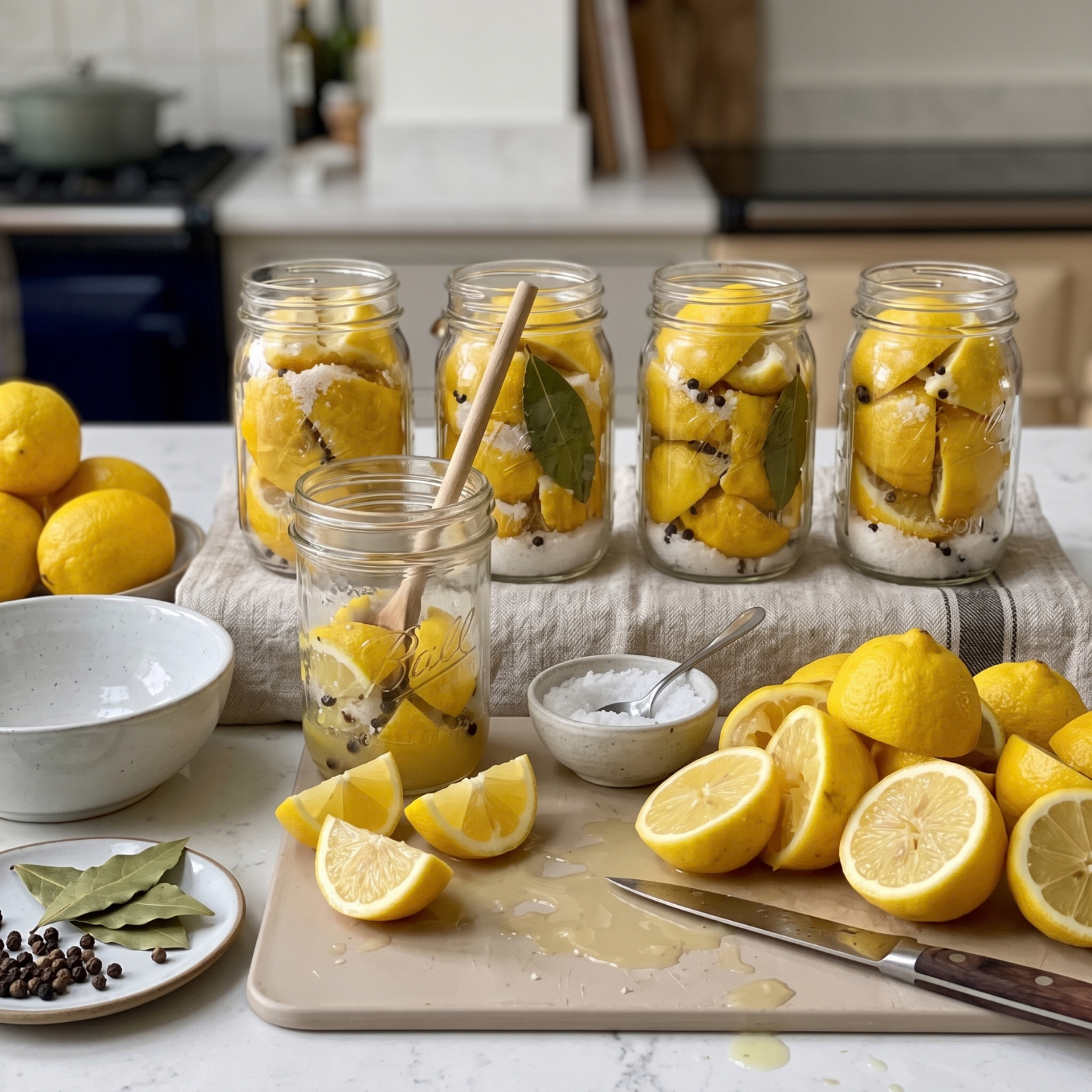
Preserved Lemons in Olive Oil
Ingredients
Method
- Sterilise a 1 litre glass jar with a tight-fitting lid.
- Toast the coriander seeds, cumin seeds and peppercorns in a dry pan over medium heat for 1-2 minutes, until fragrant. Let them cool, then mix with the coarse salt.
- Wash the lemons well. Stand each one on its end and cut it into quarters lengthwise, stopping about 1cm from the base so the lemon stays attached at the bottom.
- Pack the spiced salt into the cuts of each lemon, then pack the lemons tightly into the jar, pressing down as you go so they release their juice.
- Squeeze the extra lemons and pour the juice over the packed lemons until they're fully covered. Tuck in the bay leaves.
- Seal the jar and leave it in a cool, dark place for about 4 weeks, shaking or turning it every few days to redistribute the salt and juice.
- After about 4 weeks, the lemons should look softened and the rind should give easily when pressed. Top the jar up with Wilson's Extra Virgin Olive Oil so the lemons are fully covered and sealed under a layer of oil.
- Store in the fridge once opened, and always keep the remaining lemons submerged under oil or juice between uses.
Notes
We Use Extra Virgin Olive Oil
The salt and lemon juice do the actual curing here, so Wilson’s Extra Virgin Olive Oil comes in at the end, once the lemons have already softened.
Topping the jar with oil once the cure is done seals out the air and keeps the lemons submerged, which is what stops them from spoiling once they’re moved to the fridge.
It also means the oil itself picks up flavour over time, so once the lemons are gone, what’s left in the jar is worth keeping too.
Our Tips
Use unwaxed lemons if you can find them. The rind is what you’re eating, so a wax-free skin matters more here than in most recipes.
Keep the lemons attached at the base. Cutting into quarters without slicing all the way through makes them easier to pack and open later.
Pack the jar tightly. Pressing the lemons down as you go helps release enough juice to cover them without needing much extra.
Shake the jar every few days. This keeps the salt and juice moving around the lemons instead of settling at the bottom.
Don’t rush the cure. Four weeks is the point where the rind properly softens, so resist checking too early.
Keep everything submerged. Whatever’s left in the jar between uses needs to stay under oil or juice, not exposed to air.
How We Serve It
Chop the rind finely and stir it through a tagine, a chicken marinade or a simple dressing. A small piece carries a lot of flavour, so start with less than you think you need.
It also works rubbed into roast chicken skin before it goes in the oven, or stirred through couscous with fresh herbs.
This Heritage Month, it’s a small, useful way to bring a Cape Malay pantry staple into an ordinary weeknight.
More Ways to Use Extra Virgin Olive Oil
Once the bottle of Wilson’s Extra Virgin Olive Oil is open, it earns its keep well beyond this jar.
For a Cape Malay classic — it’s the base the whole spiced sauce builds on in our Pickled Fish.
For a quick marinated bowl — it’s the whole base of the dressing in our Marinated Mediterranean Olives.
For fish on the coals — it’s part of the marinade in our Snoek on the Braai.
The Good Stuff About Extra Virgin Olive Oil
Extra virgin is the top grade an olive oil can carry: mechanically extracted without heat or chemical solvents, with acidity kept below the threshold that defines the grade. That’s what makes it a clean, neutral seal over the lemons rather than something that competes with the salt and citrus underneath.
250ml / 500ml / 750ml / 1L / 5L
Bottle Sizes
Halaal & Kosher
Certifications
Vegan & Vegetarian
Suitable For
2 Years Unopened
Shelf Life
Ways to Change It Up
Add extra spice. A small dried chilli or a cinnamon stick in the jar gives the cure a warmer edge.
Use limes instead. Smaller and thinner-skinned, they cure a little faster than lemons.
Make a smaller batch. Halve the quantities for a jam jar-sized version if you’re trying this for the first time.
Skip the whole spices. Plain salt-and-juice lemons work just as well if you’d rather keep it simple.
Blend the leftover pulp. Once you’ve used the rind, the softened flesh can go into a dressing rather than being thrown out.
Questions You Might Have
How long do preserved lemons actually take?
About four weeks of curing in salt and their own juice before they’re soft enough to use, plus the oil top-up once that’s done.
Why do you add olive oil at the end instead of at the start?
The salt and juice need direct contact with the lemons to cure them properly. Oil goes in afterwards to seal and store them.
Do I eat the whole preserved lemon?
Mostly the rind. Some recipes use the flesh too, but the rind is what carries most of the flavour once cured.
How long do they keep once cured?
Kept refrigerated and fully submerged under oil or juice, they’ll keep well for several months.
Can I use regular table salt instead of coarse salt?
Coarse salt is better here since it draws out moisture more gradually. Table salt can work, but use slightly less as it’s more concentrated by volume.
What can I make with preserved lemons?
Chopped rind works well in tagines, roast chicken, dressings and couscous, wherever a dish needs a concentrated hit of citrus.
Where can I buy Wilson’s Extra Virgin Olive Oil?
It’s available to order directly from oliveoil.co.za and at leading retailers across South Africa.
Ready to Make This?
Get the oil that seals the jar once the lemons have done their curing.
More From Our Kitchen
Pickled Fish — Marinated Mediterranean Olives — Snoek on the Braai — All Recipes
Made this? We’d love to see
Tag us @theoilpeopleza · #WilsonsFoods