
Fond is the French word for “base,” and in a hot pan it’s also the name for the crust of caramelised bits that stick once meat has been seared properly. Classical French kitchens built a whole technique around not wasting it: deglaze the pan with liquid, scrape up every browned fragment, reduce it down, and what started as stuck-on mess becomes a proper pan sauce in under five minutes.
Make it straight after the steak. Our pan-seared steak with the rosemary compound oil leaves a good fond behind, and the sauce takes about five minutes while the meat rests. The same bottle of Wilson’s Rosemary Flavoured Oil that finished the steak is what we reach for again here.
Here’s how to build a pan sauce from scratch, whatever’s left stuck to your pan.
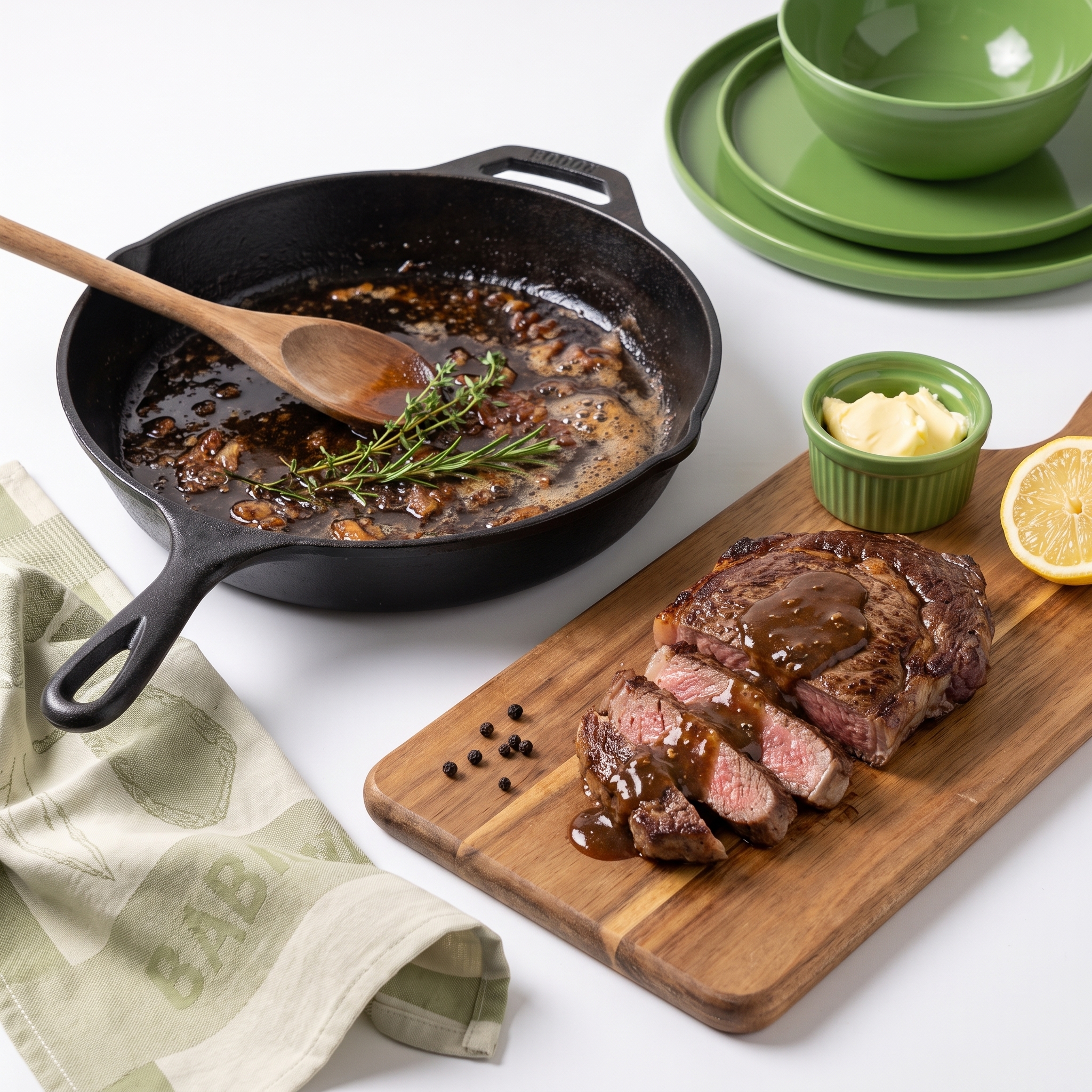
Pan Sauce From the Fond
Ingredients
Method
- Sear the meat in a hot, uncrowded pan, then move it to a board to rest. Leave the fond in the pan. It should be a deep, even brown, not black.
- Take the pan off the heat for a moment, then pour in the stock or wine.
- Put the pan back on the heat and scrape the bottom with a wooden spoon until the fond has lifted and dissolved. If you are using wine, let it bubble for a minute or two to cook off the raw alcohol.
- Let the liquid bubble down by about half, until it coats the back of a spoon.
- Tip in any juices that have collected on the board while the meat rested.
- Take the pan off the heat. Whisk in the cold butter a piece at a time until it has melted and the sauce is glossy.
- Whisk in a few drops of Wilson’s Rosemary Flavoured Oil. Taste, and season with salt and pepper only if it needs it.
- Spoon over the meat and serve straight away.
Notes
The Basics of a Pan Sauce
A pan sauce is built in four moves: sear something well enough to leave fond behind, deglaze that fond with liquid, reduce the liquid until it tightens up, then mount it with fat to give it body and shine. The flavour comes from what the meat left behind.
It’s one of the quickest sauces you can make. Five minutes after the steak or chops come off the heat, there’s a sauce ready to go over them, made in the same pan, with nothing extra to wash up.
Building the Fond Properly
A weak fond makes a weak sauce, so the work starts before the pan ever gets deglazed. Pat the meat dry, get the pan properly hot, and leave it alone once it’s in. Moving it around too soon tears the crust off before it’s had the chance to form and stick.
A crowded pan steams the meat, and steam doesn’t leave fond behind. Cook in batches if the pan isn’t big enough to give each piece room, and look for a deep, even brown across the bottom of the pan before you move on to deglazing. Black and bitter means it’s burnt, and that fond is better washed out than built on.
Deglazing the Pan
Pull the pan off the heat for a moment before you add the liquid, because cold liquid hitting a very hot pan can spit. Wine, stock or even water all work. Once it’s in, put the pan back on the heat and scrape the bottom with a wooden spoon. The fond lifts off in dark little flecks and dissolves into the liquid as it bubbles.
Wine needs a minute or two to cook off its raw alcohol edge before it tastes good in a sauce. Stock doesn’t have that problem, which is why it’s the easier starting point if you’re new to the technique.
Our Tips
Rest the meat on a board. The pan needs to stay hot and empty for the next step, and resting meat in it will overcook the outside.
Tip in any resting juices at the end. Whatever collects on the board while the meat rests goes back into the sauce before it comes off the heat.
Keep the butter cold. Cold butter melts slower, which gives you time to swirl it into a smooth emulsion.
Taste before you season. A reduced sauce concentrates salt along with everything else, so hold off on extra seasoning until the very end.
Use a pan with a light-coloured bottom if you can. It’s far easier to judge how dark the fond is getting against stainless steel than against a dark non-stick coating.
Serve it straight away. A mounted sauce sits for a few minutes at most before the butter starts to separate back out.
Reducing and Mounting With Fat
Let the deglazed liquid bubble down by about half. It should coat the back of a spoon. That’s the point where it’s concentrated enough to carry flavour without tasting watery.
Take the pan off the heat, then whisk in a cold knob of butter a piece at a time until it’s fully melted and the sauce has turned glossy. This is mounting.
For a herb-finished steak, a few drops of Wilson’s Rosemary Flavoured Oil whisked in alongside the butter carries the herb note from the sear through to the sauce, without needing fresh rosemary on hand.
Where Pan Sauces Go Wrong
Most failed pan sauces trace back to one of two moments: the sear or the mount. A pale sear leaves too little fond to build a sauce from, and no amount of reducing afterwards will put flavour back in that was never there to begin with.
At the other end, a sauce that’s too hot when the butter goes in will split — the fat separates out and floats on top instead of binding into the liquid. If that happens, pull the pan further from the heat, add a splash of cold water, and whisk hard. It often comes back together.
A burnt fond can’t be rescued. If the bottom of the pan has gone black, rinse it out, add stock, reduce it by half and mount it with cold butter. You’ll get a lighter sauce with no burnt taste.
Questions You Might Have
What exactly is fond?
Fond is the browned, caramelised residue left stuck to a pan after meat, poultry or vegetables have been seared over high heat. It’s concentrated flavour, and it’s the base every pan sauce is built from.
What liquid should I use to deglaze?
Stock, wine, or even water all work. Stock gives the most forgiving result for beginners, while wine adds acidity and needs a minute or two to cook off its raw edge.
Why did my sauce split when I added the butter?
The pan was too hot. Pull it further off the heat, add a splash of cold water, and whisk briskly to bring the emulsion back together.
Can I make a pan sauce in a non-stick pan?
You can, but non-stick coatings are designed to stop food sticking, which means less fond develops in the first place. Stainless steel or cast iron builds a far better fond.
Can I make a pan sauce without wine?
Yes. Stock, a squeeze of lemon juice and water, or even the juices released while the meat rests can all deglaze a pan on their own.
How long does a pan sauce keep?
It’s best made fresh and served within minutes, since the mounted butter will separate out again if it sits too long. Leftover sauce can be refrigerated for a day and gently rewarmed, though the texture won’t be quite as smooth.
Where can I buy Wilson’s Rosemary Flavoured Oil?
It’s available to order directly from oliveoil.co.za and at leading retailers across South Africa.
Ready to Make This?
Get the bottle that finishes both the steak and the sauce.
More From Our Kitchen
Greek Lamb Chops — Beef Stew — How to Debone a Leg of Lamb — All Recipes
Made this? We’d love to see
Tag us @theoilpeopleza · #WilsonsFoods