
Coq au vin began as a way to deal with a problem every French farmhouse kitchen understood well: an old rooster, too tough to roast, too valuable to waste. The solution was a long, slow braise in red wine, which broke down the tough muscle over a couple of hours and turned it into something rich and falling off the bone. It is one of the clearest examples in French cooking of a technique built entirely around necessity — low and slow, wine as both tenderiser and flavour, and a handful of pantry staples doing the heavy lifting.
The method has barely changed since. Chicken pieces are browned first to build a deep base of flavour, then bacon, onions, garlic and mushrooms go in before the wine and stock arrive to do the long, patient work. We brown ours in Wilson’s Butter Flavoured Oil, which gets the pan properly hot without the sputtering and scorching that real butter tends to do at searing temperatures.
Here is our version, written out step by step below, along with the tips we have picked up for getting the sauce right every time.
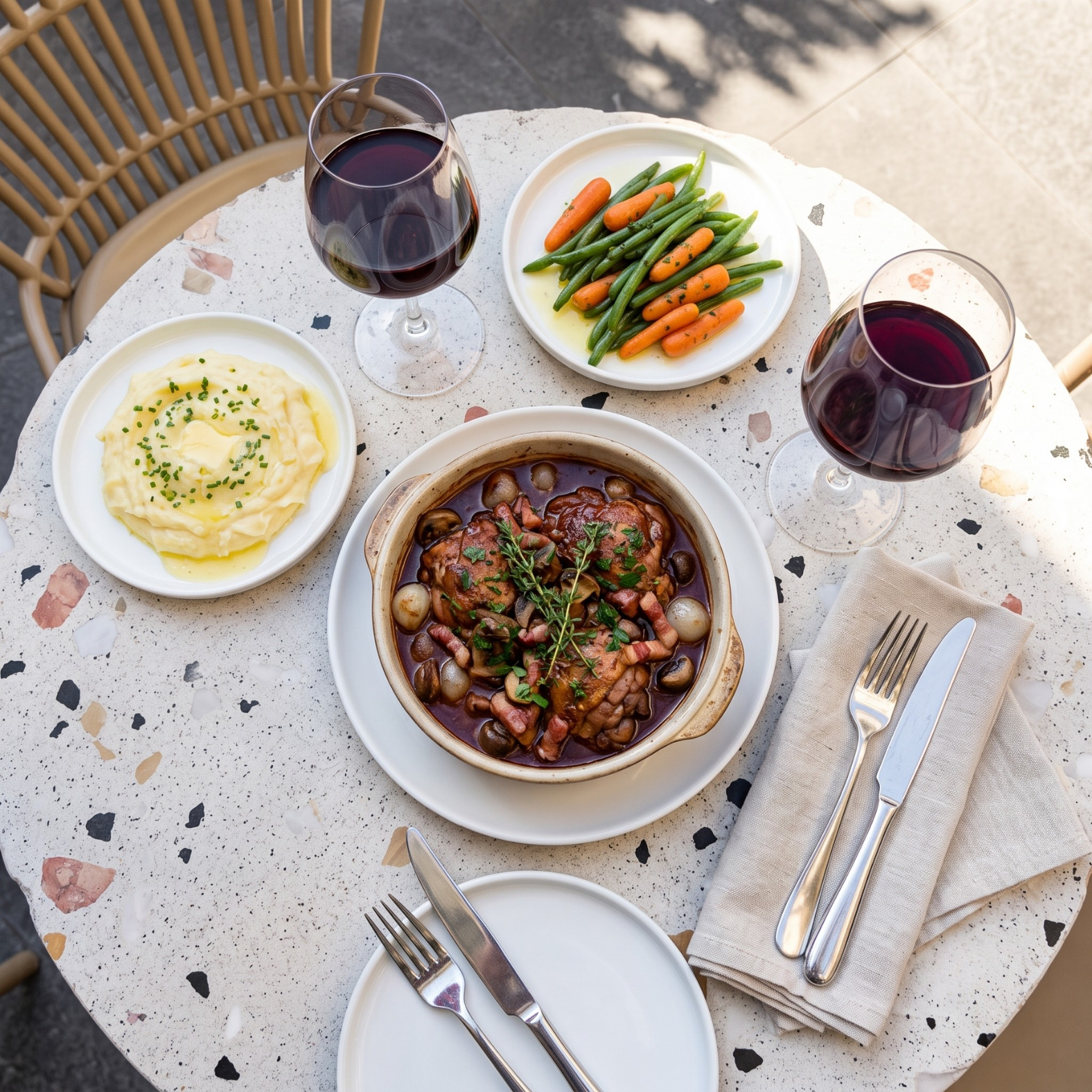
Coq au Vin
Ingredients
Method
- Pat the chicken pieces dry with paper towel and season well with salt and pepper.
- Heat the Wilson's Butter Flavoured Oil in a large, heavy-based pot over medium-high heat. Brown the chicken in batches, skin side down first, until deep golden on all sides. Set aside on a plate.
- Add the bacon lardons to the same pot and cook for 3-4 minutes until they start to crisp and release their fat.
- Add the onions and carrots and cook for 5 minutes, stirring occasionally, until softened. Add the garlic and mushrooms and cook for a further 3 minutes.
- Sprinkle the flour over the vegetables and stir well to coat, cooking for 1 minute to remove the raw flour taste.
- Pour in the red wine, scraping up any browned bits stuck to the bottom of the pot, then add the stock, tomato paste, bay leaves and thyme.
- Return the chicken and any resting juices to the pot. Bring to a gentle simmer, then cover and cook on low heat for 1 hour 30 minutes, or until the chicken is very tender.
- Uncover and simmer for a further 10-15 minutes to reduce and thicken the sauce slightly. Taste and adjust the seasoning.
- Remove the bay leaves and thyme stalks, scatter with fresh parsley, and serve hot.
Notes
We Use Butter Flavoured Oil
Getting a good sear on chicken pieces means a hot pan and a fat that can handle the heat. This is exactly where Butter Flavoured Oil earns its place in a coq au vin pot. It browns the skin properly and builds the fond at the bottom of the pan that becomes the backbone of the sauce, without the milk solids in real butter catching and burning before the chicken is even coloured.
Once the chicken, bacon and vegetables come out and the wine goes in, that same buttery note carries through the braise. You get the classic French richness the dish is known for, built into the base rather than stirred in at the end.
It is a small swap with a real effect on how the finished sauce tastes and how forgiving the browning stage is.
Our Tips
Pat the chicken dry first. Wet skin steams instead of browning, and browning is where most of the flavour in this dish comes from.
Brown in batches. Crowding the pan drops the temperature and you end up with grey chicken instead of a deep golden crust.
Scrape up every bit of fond. Those browned bits stuck to the pan after searing are concentrated flavour — a splash of wine and a wooden spoon will lift them straight into the sauce.
Use a wine you would drink. It reduces down and concentrates, so anything overly harsh or sweet will carry through into the final sauce.
Let it rest before serving. Ten minutes off the heat gives the sauce time to settle and the flavours time to come together properly.
Make it a day ahead if you can. Braises like this taste even better the next day, once everything has had time to sit.
How We Serve It
Coq au vin wants something underneath it to soak up the sauce. Buttery mashed potatoes are the classic route, and they do the job perfectly here, but crusty bread for mopping the plate works just as well if you are after something simpler.
A scattering of fresh parsley over the top cuts through the richness and adds a bit of colour, which this dish can always use given how deep the sauce goes.
If you are serving it for a table of people, a simple green salad with a sharp dressing on the side balances things out nicely.
More Ways to Use Butter Flavoured Oil
Coq au vin is only the start. Once you have a bottle of Butter Flavoured Oil in the cupboard, it earns its keep across all sorts of dishes that call for that same buttery base.
Leek and potato soup — it builds a rich, buttery base for the vegetables before the stock goes in, no real butter required. Try it in our Super Leek & Potato Soup.
Parsnip and white bean soup — a drizzle at the start softens the vegetables and rounds out the flavour before pureeing, as in our Parsnip, Sage & White Bean Soup.
Another red wine braise — the same searing job comes up again in our Lamb Casserole with Red Wine, where browning the meat well before the braise makes all the difference.
Popcorn and roasted vegetables — away from braises entirely, a drizzle over popcorn or roasted veg straight out of the oven is where this oil started out, and it still does the job.
The Good Stuff
Flavoured oils like this one are built to give you that familiar buttery richness without the parts of real butter that cause trouble in the pan. Butter is mostly water and milk solids, and those solids are what catch and burn at the high heat you need for a proper sear. A flavoured oil sidesteps that, which matters a lot in classic French techniques where browning meat properly is the whole foundation of the dish.
On the credentials side, Wilson’s Butter Flavoured Oil is Halaal and Kosher certified, and suitable for vegan, vegetarian and Hindu diets. It keeps well in a cool, dark place and has a shelf life of two years, so there is no rush to use it up once opened.
It comes in 250ml, 500ml and 1L bottles, so whether you are cooking for one pot of coq au vin or stocking a busy kitchen, there is a size that fits.
Ways to Change It Up
Swap in chicken thighs only if you prefer dark meat throughout, since they hold up especially well to the long braise.
Add baby onions instead of chopped ones for a more traditional look, left whole so they hold their shape through the cooking time.
Use a white wine version if red wine is not on hand, which gives you a lighter, brighter sauce with the same technique.
Stir through a spoon of cream at the end for an even richer sauce, off the heat so it does not split.
Leave out the bacon for a lighter version, and add an extra splash of stock to make up the missing fat.
Questions You Might Have
Can I make coq au vin ahead of time?
Yes, and it is often better the next day. Make it up to two days ahead, keep it covered in the fridge, and reheat gently on the stove before serving.
What cut of chicken works best?
Bone-in, skin-on thighs and drumsticks hold their texture through the long braise far better than breast meat, which tends to dry out.
Can I freeze coq au vin?
It freezes well for up to three months. Cool it completely first, freeze in an airtight container, and thaw overnight in the fridge before reheating.
Do I have to use red wine?
Red wine is traditional and gives the dish its deep colour and flavour, but a dry white wine will work with the same method if that is what you have.
Why brown the chicken before braising?
Browning builds flavour that a straight braise cannot replicate, and the bits left in the pan afterwards become the base of the sauce.
Where can I buy Wilson’s Butter Flavoured Oil?
It’s available to order directly from oliveoil.co.za and at leading retailers across South Africa.
Can I thicken the sauce if it is too thin?
Simmer it uncovered for a few extra minutes to reduce it, or stir through a small knob of flour and butter mashed together for a quicker fix.
Ready to Make This?
Grab a bottle of Butter Flavoured Oil and get that pan properly hot — the rest of coq au vin takes care of itself from there.
More From Our Kitchen
Super Leek & Potato Soup — Parsnip, Sage & White Bean Soup — Lamb Casserole with Red Wine — All Recipes
Made this? We’d love to see
Tag us @theoilpeopleza · #WilsonsFoods