
A potjie is exactly what the name promises: everything goes into one pot, in layers, and it isn’t touched again until it’s done. No stirring, no lifting the lid to check, no rushing the coals. The layers build from the bottom up — meat first, then vegetables, then whatever sits on top — and the whole thing cooks itself through steady, low heat over several hours.
Beef shin is the right cut for it. It carries more connective tissue than most cuts, which is exactly why it turns soft and rich rather than tough when it’s given that kind of time. We brown it hard first in Wilson’s Rosemary Flavoured Oil before it goes into the pot, then let everything else build on top of it. The dumplings go on last, steaming in the gravy for the final twenty minutes.
By the time the dumpling goes on top for its last twenty minutes, the kitchen or the yard smells like it’s been doing this for hours — because it has. Here’s how we put it together.
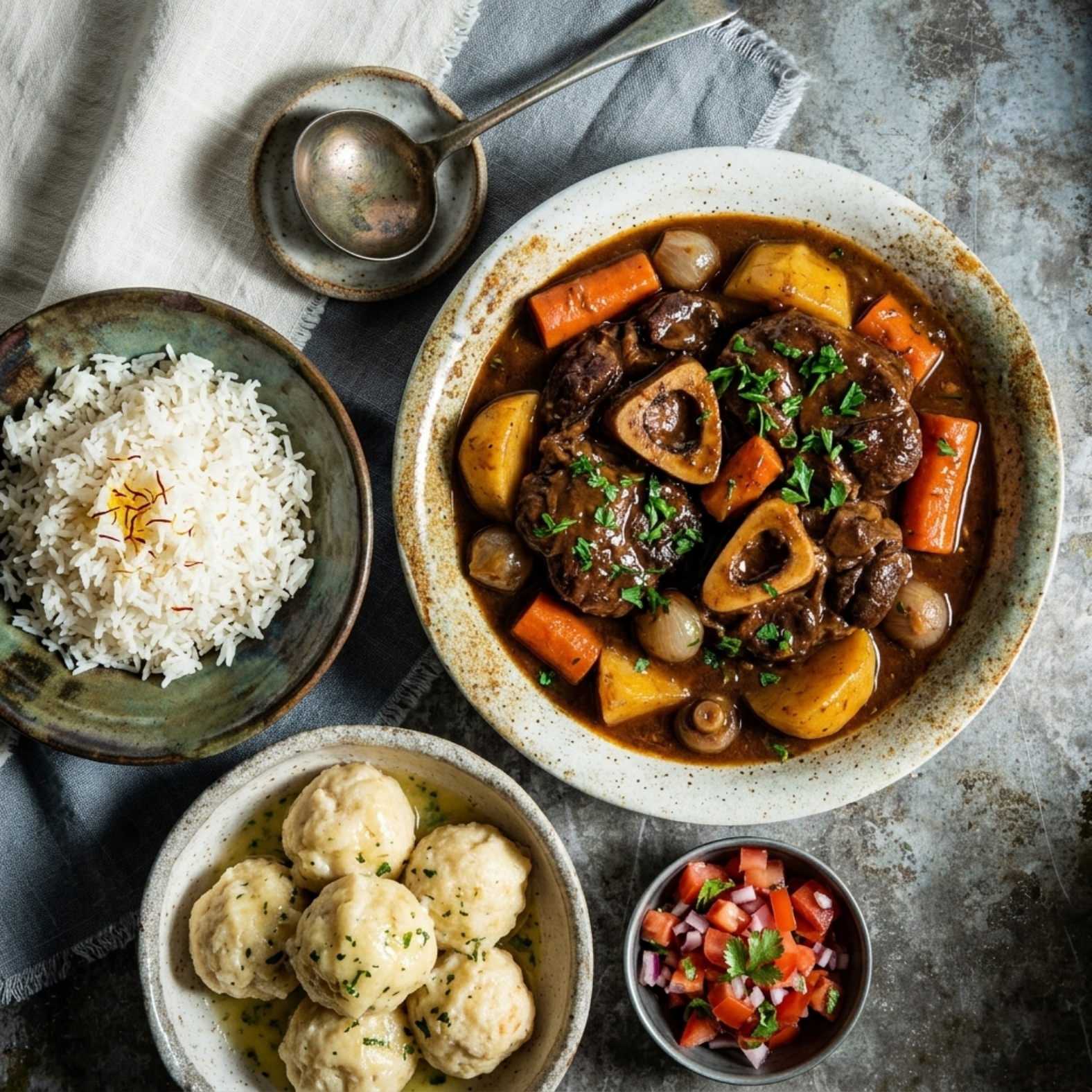
Beef Shin Potjie with Fluffy Dumpling
Ingredients
Method
- Heat the Wilson's Rosemary Flavoured Oil in the potjie pot over hot coals or on the stove. Brown the beef shin in batches until deeply coloured on all sides, then set aside.
- Add the onions, garlic, carrots and celery to the same pot and cook for a few minutes until they start to soften, stirring up any browned bits from the bottom.
- Sprinkle the flour over the vegetables and stir through to coat everything evenly.
- Return the beef shin to the pot. Pour in the beef stock and red wine, then add the bay leaves and rosemary sprigs.
- Bring to a gentle simmer, cover with the lid, and cook low and slow for about 3 hours, checking occasionally to make sure it isn't catching at the bottom.
- Add the potatoes to the pot in the last 45 minutes of cooking and season with salt and pepper to taste.
- While the potatoes cook, make the dumpling. Combine the self-raising flour and salt in a bowl, then rub in the cold butter until the mixture looks like coarse crumbs.
- Stir in the milk a little at a time until you have a soft, slightly sticky dough. Fold through the chopped parsley if using.
- Shape the dough into one large ball, or several smaller ones, and place on top of the simmering potjie.
- Cover and cook for a further 20 to 25 minutes without lifting the lid, until the dumpling has puffed up and cooked through.
- Serve straight from the pot, spooning the beef, vegetables and gravy over each portion of dumpling.
Notes
- Storage: keeps well in an airtight container in the fridge for up to 3 days.
- Make-ahead: the beef and vegetable base can be made a day ahead and reheated gently, adding a fresh dumpling on top when you reheat.
- Freezing: the beef and vegetables freeze well for up to 2 months; the dumpling does not freeze well and should be made fresh.
- Serving suggestion: serve with a simple green salad or buttered pumpkin, and a glass of red wine alongside.
We Use Rosemary Flavoured Oil
Beef shin needs a proper sear before it ever sees liquid. A cold pan or a lazy oil won’t do it — you need something that can take real heat without breaking down, and that’s what Wilson’s Rosemary Flavoured Oil is built for. It browns the meat properly on all sides, and that crust is where a lot of the depth in the final pot comes from.
From there it keeps working. As the potjie simmers for hours, the oil carries the rosemary through the stock, the wine, the vegetables, all of it. Rosemary and beef are one of those pairings that just makes sense — the herb is strong enough to stand up to a long braise without disappearing, and it cuts nicely through the richness of the shin as it breaks down.
It’s a small step at the start of a long cook, but it sets the tone for everything that follows.
Our Tips
Brown in batches — crowd the pot and the shin steams instead of browning, so work in two or three batches even if it takes longer.
Don’t rush the lid — keep it on and resist stirring too often, a potjie does its best work left alone.
Check the coals, not the clock — a potjie over coals needs steady low heat, so rake the coals thin rather than piling them high.
Keep the dumpling dough soft — a wetter dough gives you a lighter, fluffier top than a stiff one.
Only lift the lid for the dumpling — once it goes on, leave the pot alone so the steam can do its job.
Taste before you season again — a long braise concentrates flavour, so hold back on salt until the last half hour.
How We Serve It
This one goes straight from the pot to the table, no plating required. We set the potjie down in the middle, hand out bowls, and let people help themselves to a piece of shin, a spoon of vegetables, and a dumpling each. It’s the kind of meal that keeps people sitting around the same table for a second helping and then a third cup of coffee after.
A simple green salad or some buttered pumpkin on the side is usually enough. If there’s bread on the table, it’s there to mop up the gravy, not to compete with it. For a proper Sunday lunch, a glass of red wine alongside does the dish justice.
It also reheats beautifully the next day, so we rarely mind making a bit extra.
More Ways to Use Rosemary Flavoured Oil
Once you’ve got a bottle of Wilson’s Rosemary Flavoured Oil in the pantry, the potjie is only the start of it. Here’s where else it earns its keep.
Lamb Neck Potjie — the same long, slow logic applies here, with the rosemary working just as well against lamb as it does against beef, as shown in our lamb neck potjie recipe.
Snoek Fishcakes — a finishing drizzle over the cakes just before serving brings a herby lift that works surprisingly well with fish, as we do in our snoek fishcakes with rosemary oil drizzle.
Braai Marinades — brush it over chicken, pork chops or steak before they hit the grate, it holds up well to smoke and open flame.
Roast Potatoes — toss potatoes in it before roasting for a crisp, herby edge that needs almost nothing else added.
Braai Potato Salad — if you’re after something colder for the same spread, our braai potato salad with white truffle oil shows how far a good finishing oil can carry a side dish.
The Good Stuff
A good herb-infused oil should taste like the herb was actually in the bottle, not just brushed past it. That’s the real test of any rosemary oil — the flavour needs to come from genuine infusion, not a shortcut, so it holds up through hours of heat rather than fading out halfway through a braise. Real infusion is also what lets an oil like this do double duty as both a cooking oil and a finishing one.
Wilson’s Rosemary Flavoured Oil pairs well with chicken, lamb, pork, steaks and fish, and works just as well with mushrooms, potatoes, peas and spinach. It’s built for the kind of Sunday lunch and braai marinades South African kitchens run on. You’ll find it in 250ml and 1L bottles, as well as 6x250ml and 12x1L cases for anyone stocking up.
It’s a straightforward bottle with a clear job, and it does that job well.
Ways to Change It Up
Swap the shin for oxtail — oxtail takes the same long braise well and gives you an even richer gravy.
Add butternut — chunks of butternut added in the last hour bring a bit of sweetness against the beef.
Make it a red wine potjie — increase the wine and reduce the stock slightly for a deeper, more savoury gravy.
Cheese the dumpling — fold a handful of grated cheddar into the dumpling dough for a sharper, saltier top.
Go smaller — drop the dumpling dough by the spoonful instead of one large piece for individual portions that cook faster.
Finish it on the fire — if you’re already braaiing, keep the potjie going on the same coals for that unmistakable smoke note.
Questions You Might Have
Can I make this potjie in a regular pot instead of over coals?
Yes. A heavy-based pot on the stove works well, just keep the heat low and steady, the same way you would with coals.
Why is my beef shin still tough after a few hours?
It usually just needs more time. Shin has a lot of connective tissue and it needs a proper long, slow braise before it softens, rushing the heat won’t get you there any faster.
Can I make the dumpling ahead of time?
The dough is best mixed just before it goes on the pot, but you can measure out the dry ingredients ahead and mix in the wet ones at the last minute.
Can I freeze the leftover potjie?
The beef and vegetables freeze well on their own. The dumpling is best made fresh, so we’d leave it out and add a new one when you reheat.
What can I use instead of red wine?
Extra beef stock works fine if you’d rather leave the wine out, the flavour will just be a touch lighter.
Do I need bone-in beef shin?
Bone-in gives the gravy more body, but boneless shin will still work well if that’s what’s available.
Where can I buy Wilson’s Rosemary Flavoured Oil?
It’s available to order directly from oliveoil.co.za and at leading retailers across South Africa.
Ready to Make This?
Get the coals going, pour a glass of something red, and let this pot do the rest of the evening for you.
Shop Now More RecipesMore From Our Kitchen
Lamb Neck Potjie — Slow-Braised Oxtail Stew — Snoek Fishcakes with Rosemary Oil Drizzle — All Recipes
Made this? We’d love to see
Tag us @theoilpeopleza · #WilsonsFoods