
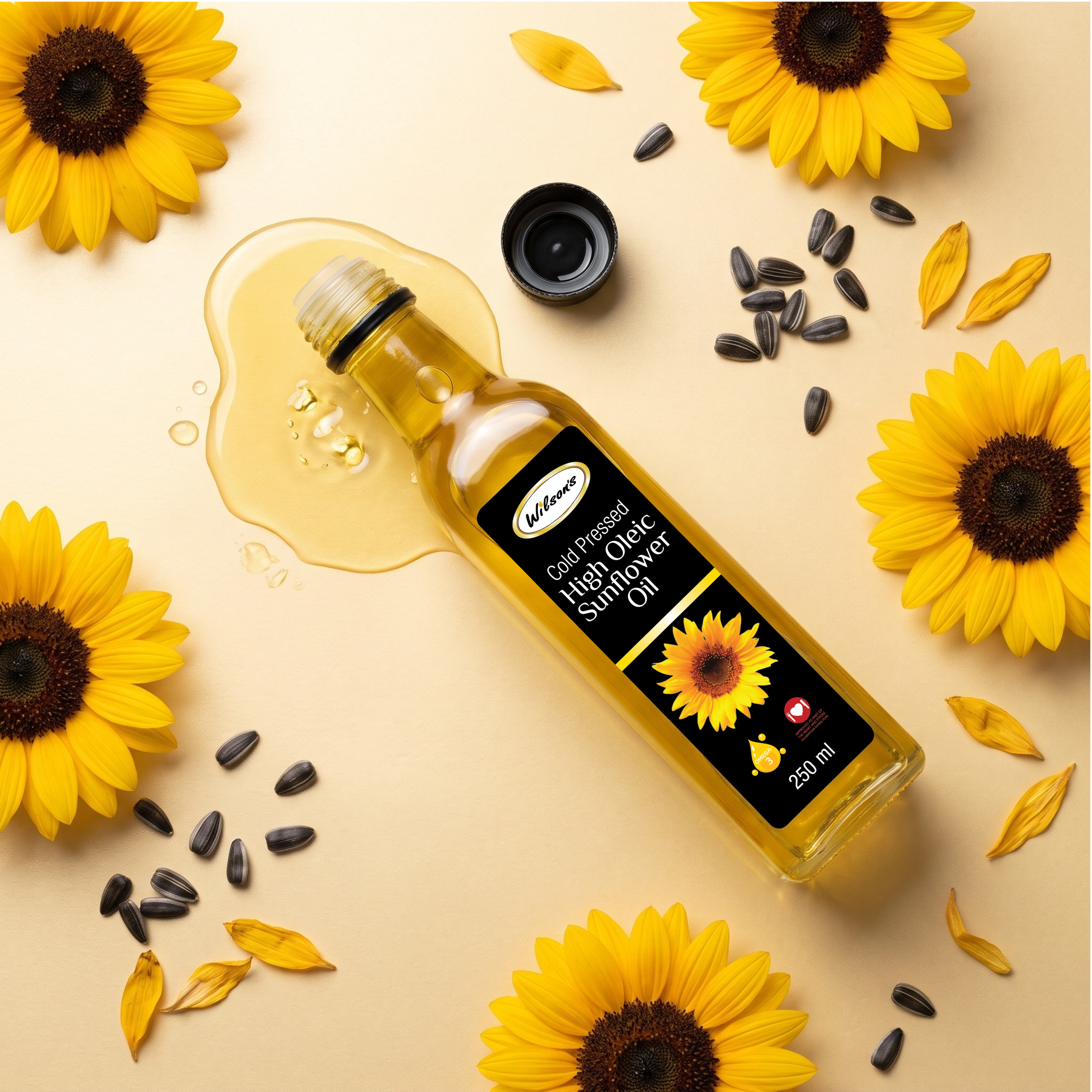
Not all sunflower oil is the same oil. Most bottles on South African shelves are pressed from ordinary sunflower seeds and are mostly linoleic acid, a polyunsaturated fat. High oleic sunflower oil comes from seeds bred for a different fatty acid altogether — oleic acid, a monounsaturated fat, the same one that makes olive oil good for you. According to published nutrition research on high oleic sunflower oil, it typically contains more than 80% oleic acid by weight, compared to under 20% in regular sunflower oil.
Wilson’s High-Oleic Sunflower Oil is cold pressed from 100% high oleic sunflower seed oil, with a nutritional profile closer to extra virgin olive oil than to the sunflower oil most people grew up with.
This guide covers what makes an oil “high oleic,” how it compares to regular sunflower oil and to olive oil, what the health research actually says, and what it is best used for in a South African kitchen.
What Makes an Oil “High Oleic”?
Sunflower seeds have been bred for decades to shift their fatty acid balance. Regular sunflower oil is roughly 19% oleic acid and 67% linoleic acid, a polyunsaturated fat that breaks down faster under heat. High oleic varieties flip that ratio, landing at around 81% oleic acid and under 10% linoleic, according to published fatty acid breakdowns of sunflower oil varieties.
In Wilson’s High-Oleic Sunflower Oil, that works out to 65.2g of monounsaturated fat per 100ml, against 17.0g polyunsaturated and 8.5g saturated — figures taken directly from our own product analysis, not an estimate.
How It Compares to Regular Sunflower Oil and Extra Virgin Olive Oil
Regular sunflower oil is lighter in character and breaks down faster at high heat. High oleic sunflower oil holds up far better — its fat profile behaves more like olive oil’s, which is why both are considered more heat-stable, heart-healthier choices than oils high in polyunsaturated fat.
The difference between High-Oleic Sunflower Oil and Extra Virgin Olive Oil comes down to flavour and smoke point rather than health. Extra virgin olive oil carries a distinct, peppery, fruity taste and a lower smoke point. High-Oleic Sunflower Oil is close to flavourless and handles higher heat, which makes it the one to reach for when a dish needs real heat and the oil’s own flavour isn’t the point — searing, roasting, deep-frying — while the extra virgin stays for dressings, dips and finishing.
The Health Benefits of High Oleic Sunflower Oil
The US Food and Drug Administration recognises a qualified health claim that oils containing at least 70% oleic acid per serving, such as high oleic sunflower oil, may reduce the risk of coronary heart disease when used in place of saturated fat, as reported by registered dietitians covering sunflower oil research.
A study published in the Journal of the American Dietetic Association found that replacing saturated fat with high oleic sunflower oil lowered LDL (“bad”) cholesterol and triglyceride levels. Sunflower oil is also a strong source of vitamin E — an antioxidant that supports immune function and protects cells from damage — with one tablespoon providing roughly a third of the recommended daily intake.
Wilson’s High-Oleic Sunflower Oil also carries a real Omega-3 count: 1,070mg per 100ml, including 110mg of alpha-linolenic acid, and is approved as part of the Heart and Stroke Foundation’s eating plan.
Our Tips
Use it where the heat is highest — roasting, pan-searing and stir-frying are where its heat stability counts most.
Bake with it — its neutral flavour and light texture suit cakes, muffins and breads where you don’t want an oil’s taste coming through.
Keep your Extra Virgin Olive Oil for finishing — dressings, dips and drizzling over a finished plate are still where olive oil’s flavour earns its place.
Don’t exceed the smoke point — at around 230°C it’s a high ceiling, but any oil pushed past its smoke point starts to break down and smoke.
Store it the same way as your olive oil — a cool, dry place, away from direct heat or sunlight, keeps it fresh for longer.
What to Use High-Oleic Sunflower Oil For
Roast vegetables and meat at high oven temperatures without the oil breaking down. Pan-sear steak, chicken or fish where you need real heat. Stir-fry quickly over a hot pan. Deep-fry without the oil turning on you halfway through the batch. Bake it into cakes, muffins and loaf breads where a neutral, light oil is what the recipe calls for. Use it as the base for a marinade or an everyday salad dressing when you want the dressing’s other flavours, not the oil’s, to lead.
A quick look at what’s actually in the bottle.
230°C
Smoke Point
65.2g
Monounsaturated Fat per 100ml
1,070mg
Omega-3 per 100ml
Heart & Stroke
Foundation Approved
Questions You Might Have About High Oleic Sunflower Oil
What is high oleic sunflower oil?
It’s sunflower oil pressed from seeds bred to be high in oleic acid, a monounsaturated fat, rather than the linoleic acid regular sunflower oil is mostly made of. High oleic varieties typically contain more than 80% oleic acid.
Is high oleic sunflower oil healthier than regular sunflower oil?
It’s higher in monounsaturated fat and more heat-stable, which research links to better cholesterol outcomes and fewer breakdown byproducts during high-heat cooking. The FDA recognises a qualified health claim that oils with at least 70% oleic acid may reduce the risk of coronary heart disease.
What is the smoke point of high oleic sunflower oil?
Around 230°C (450°F), one of the higher smoke points of any common cooking oil, which makes it well suited to roasting, frying and searing.
Can I use high oleic sunflower oil for baking?
Yes. Its neutral flavour and light texture make it a good everyday choice for cakes, muffins and breads, where you don’t want the oil’s own taste coming through.
Does high oleic sunflower oil taste different from regular sunflower oil?
Not noticeably. Both are mild and neutral. The difference between them is in the fat profile and heat stability, not the flavour.
Where can I buy Wilson’s High-Oleic Sunflower Oil?
It’s available to order directly from oliveoil.co.za and at leading retailers across South Africa.
Ready to Try It?
A lighter, heart-healthier everyday oil for everything your olive oil isn’t built for.
More From Our Kitchen
Which Wilson’s Oil for Which Heat — What Is Extra Virgin Olive Oil? — All Recipes
Made this? We’d love to see
Tag us @theoilpeopleza · #WilsonsFoods