
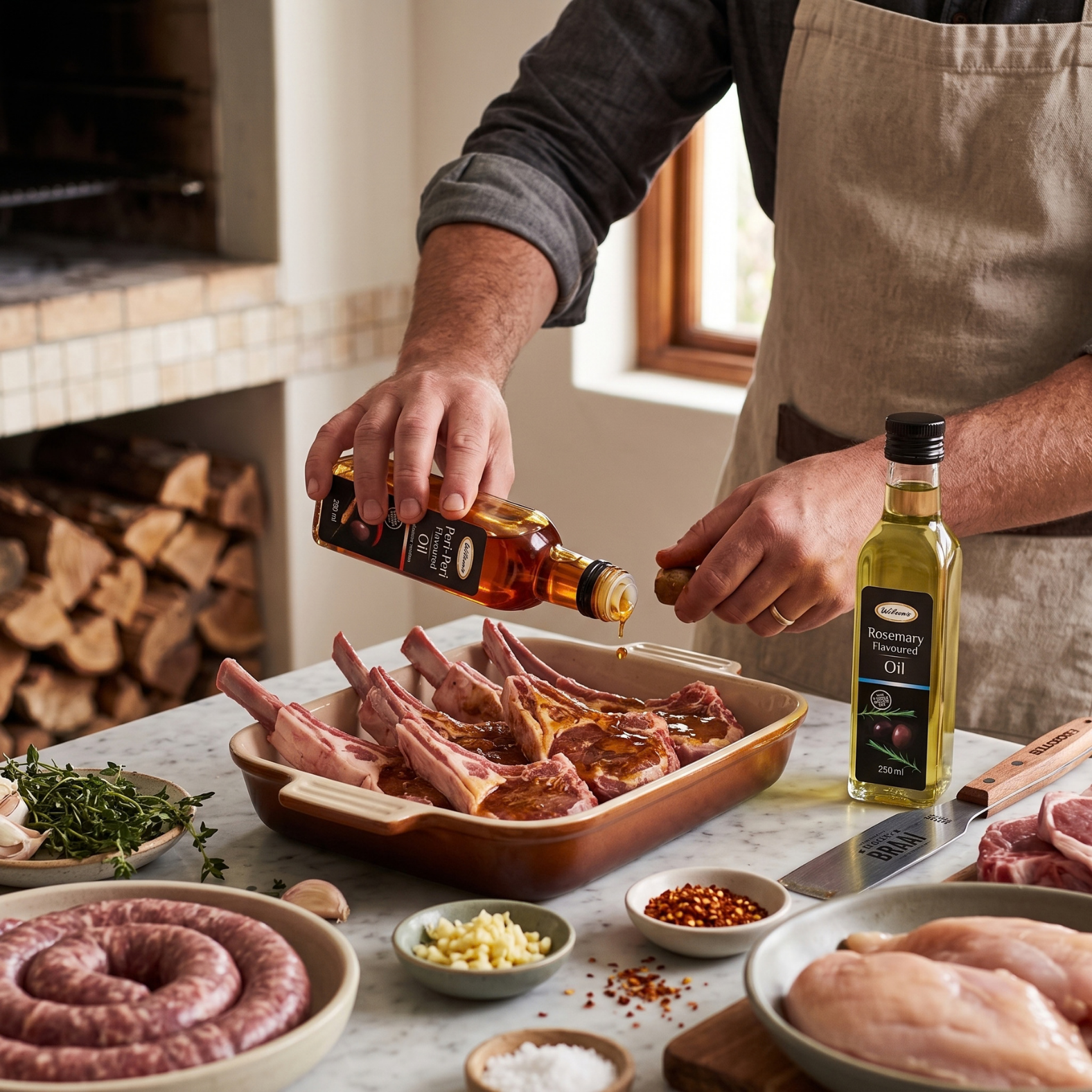
By the Wednesday before Heritage Day, the butcheries and bottle stores are at their busiest all year. Trolleys full of chicken and chops, bags of coals stacked by the till, someone asking the butcher which cut braais best for a crowd. Heritage Day is tomorrow, and the actual cooking on the day only goes as well as the marinating and basting that happens tonight.
Most people treat marinade and basting oil as the same thing. They’re not, and the difference is most of what separates a good braai from an average one. This is a proper guide to both, covering Wilson’s Peri-Peri, Garlic and Rosemary Flavoured Oils and how each one earns its place on a different part of the fire.
Read this now, get the marinade on tonight, and Thursday takes care of itself.
The Marinade Isn’t the Same as the Baste
The work of a marinade happens before the meat goes near the fire. It’s there to season the outside, start breaking down tough muscle fibre, and get flavour further into the meat than salt and pepper alone ever could. Chicken and fish only need 30 minutes to 2 hours in a marinade. Beef and lamb are worth marinating overnight, since they’re tougher cuts that benefit from more time. Vegetables need only 30 minutes; anything longer and they start to turn mushy before they even hit the fire. An oil-based marinade also clings to fatty cuts like chicken in a way a thin, water-based one doesn’t, which matters since a marinade that slides off and drips into the coals is what causes flare-ups, not the fat itself.
Basting is a different job entirely, and it happens throughout the cook, not before it. A good basting oil keeps the surface of the meat moist while it’s exposed to direct heat, carries more flavour on with every pass of the brush, and helps build the glossy, slightly charred finish that separates a properly basted braai from a dry one.
One golden rule holds for both: never reuse marinade that’s touched raw meat for basting later without boiling it first. Set aside a separate portion for basting before the raw meat ever goes in.
Three Oils, Three Jobs
Wilson’s Peri-Peri Flavoured Oil is built for chicken and prawns. Blended into a marinade with garlic, paprika and citrus, it needs at least an hour to work before the fire, and it bastes well right through the cook since the chilli only gets better with a bit of char.
Wilson’s Garlic Flavoured Oil is the one to reach for on milder proteins and vegetables, and on the bread. Brushed onto roosterkoek dough or a butterflied loaf before it goes on the grid, it browns without the garlic ever tasting raw or bitter, which a sprinkle of garlic powder can’t manage over open heat.
Wilson’s Rosemary Flavoured Oil belongs with lamb, beef and pork. It’s the one worth an overnight marinade rather than a quick one, and it’s the best of the three for continuous basting on chops or steak, since rosemary holds up under direct heat.
None of the three needs to compete with the others on the same fire. Peri-peri on the chicken, garlic on the bread and vegetables, rosemary on the red meat is a full Heritage Day spread with no overlap and no guesswork about which oil goes where.
Getting the Fire Right
Most basting mistakes come down to the wrong heat at the wrong time, not the wrong oil. Whole chickens and thick cuts want indirect heat first — coals banked to one side, meat over the cooler side with the lid down — so the inside cooks through before the outside burns. Chops, steak and boerewors go straight over direct heat, since they’re thin enough to cook fast without drying out.
Baste every 5 minutes once anything is over direct heat, turning at the same time so one side never sits too long. Anything over indirect heat can go longer between bastes, since it isn’t drying out as fast.
Let everything rest for 5 to 10 minutes once it’s off the fire. It’s the step people skip when they’re hungry and the one that makes the biggest difference to how juicy the meat actually is once it’s on the plate.
Ready to Stock Up Before Thursday?
Get all three oils in one order and there’s no guessing which one goes where on the day.
More From Our Kitchen
Homemade Roosterkoek — Lamb Potjie — Braai Tip: Marinades That Impress with Extra Virgin Olive Oil — All Recipes
On the history behind the day itself, South African History Online has the full story of how the 24th became Braai Day.