
Minestrone was never meant to be a fixed recipe. The word itself simply means “big soup” in Italian, and it grew out of home kitchens where the pot on the stove absorbed whatever vegetables, beans, and odds of pasta were on hand that week. There was no single version to get right — only a method: build a base, add what you have, let it simmer until it tastes like something.
That looseness is part of why the soup has lasted for centuries. It rewards good habits more than exact measurements — softening your vegetables slowly in extra virgin olive oil before anything else goes in the pot, for instance, so every spoonful carries that base flavour through to the end.
Our version keeps that same spirit — a full pot of vegetables, beans, and small pasta, built the slow way. Here’s how we make it.
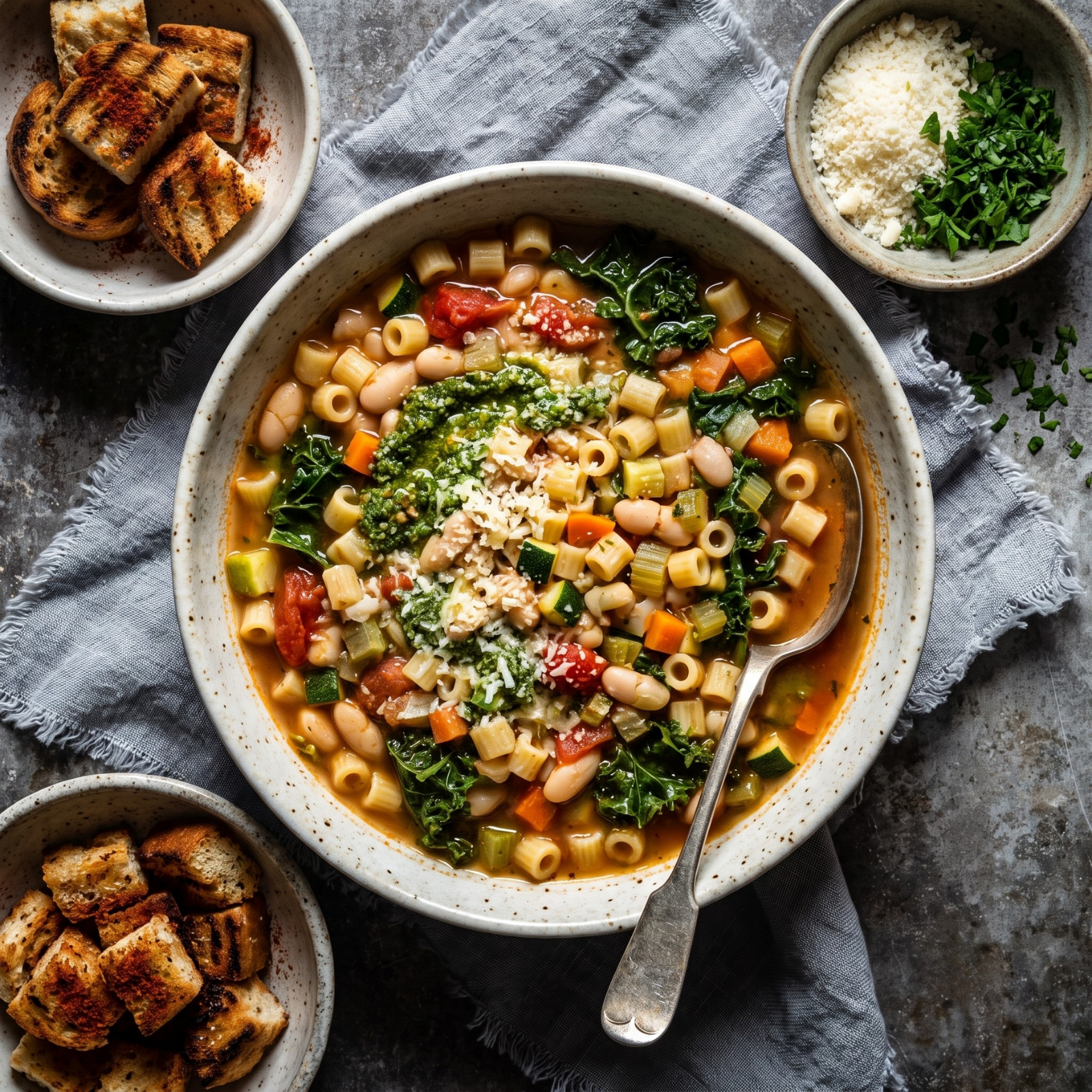
Wholesome Minestrone Soup
Ingredients
Method
- Warm the olive oil in a large, heavy-based pot over medium-low heat. Add the onion, carrots, and celery, and cook gently for 10 minutes, stirring often, until softened but not browned.
- Stir in the garlic and courgette, and cook for a further 2 minutes.
- Add the chopped tomatoes, vegetable stock, bay leaves, and oregano. Season with salt and pepper.
- Bring to a gentle simmer, then partially cover and cook for 20 minutes, stirring occasionally.
- Stir in the cannellini beans and shredded cabbage or kale, and simmer for a further 10 minutes.
- Meanwhile, cook the pasta separately in salted boiling water according to the packet instructions, then drain.
- Stir the cooked pasta through the soup just before serving, or divide it among bowls and ladle the soup over the top.
- Remove the bay leaves. Taste and adjust the seasoning, then serve with a drizzle of Wilson's Extra Virgin Olive Oil, fresh herbs, and grated parmesan if using.
Notes
We Use Extra Virgin Olive Oil
Minestrone starts with a soffritto — onion, carrot, and celery, softened slowly before anything else joins the pot. This is the step that decides how the whole soup tastes, and it needs a fat that can hold gentle heat for ten or fifteen minutes without turning bitter or thin. That’s exactly what Wilson’s Extra Virgin Olive Oil is built for — it carries the sweetness out of the vegetables instead of just coating them.
There’s also a second, older tradition worth keeping: a finishing drizzle over the bowl, added right at the table rather than in the pot. Heat softens olive oil’s sharper, peppery notes, so a spoonful poured on at the end brings back the flavour the simmer smoothed out. It’s a small habit, but it changes the soup from something that’s simply cooked to something that’s finished properly.
Both moments — the base and the finish — are why the oil you use for minestrone matters more than it might seem.
Our Tips
Don’t rush the soffritto. Give the onion, carrot, and celery a proper ten minutes over low heat before adding anything else. This is where most of the flavour comes from.
Add pasta close to serving. If you’re not eating the whole pot in one go, cook the pasta separately and stir it into each bowl. It keeps soaking up liquid and turns soft if left in the pot overnight.
Season in layers. A little salt with the vegetables, more once the stock goes in, and a final check right before serving. Minestrone needs more seasoning than most soups because there’s so much going on in the pot.
Save some bean liquid. A splash of the water from your tinned beans stirred in at the end thickens the broth slightly without any extra effort.
Finish with oil, not before. Save your good extra virgin olive oil for the drizzle at the table rather than pouring it all in during cooking.
How We Serve It
We bring the pot straight to the table and let everyone serve themselves. A good loaf of crusty bread on the side is really all it needs — something to mop up the last of the broth once the vegetables and pasta are gone.
Grated parmesan works well stirred through at the table, and a scattering of fresh basil or parsley lifts the whole bowl. If you want to stretch it into a heartier meal, a poached egg dropped in near the end turns it into something closer to a full dinner.
It also sits well as a starter before something simple like grilled fish or roast chicken, since it’s filling without being heavy.
More Ways to Use Extra Virgin Olive Oil
Once you’ve got a bottle of Wilson’s Extra Virgin Olive Oil on the counter, it’s worth putting it to work beyond this pot of soup. A few of our other favourites:
Another Tuscan-style vegetable soup — built on the same slow soffritto base, this one leans on bread and beans for body. Try our Rae’s Ribollita.
A baked dough that drinks up olive oil — dimpled, salted, and baked until the crust turns golden. That’s our Three Flavour Focaccia.
A slower, earthier grain soup — pearl barley and greens simmered until thick, finished the same way as minestrone. Have a look at our Pearl Barley and Cavolo Nero Soup.
A simple dressing base — whisked with lemon and a pinch of salt, it turns any side salad into something worth eating alongside your soup.
The Good Stuff
“Extra virgin” is a grade, not just a label. It means the oil was extracted mechanically, using only pressure and no heat or chemical solvents, and that it falls below a strict acidity threshold. That process is what preserves the peppery, grassy character extra virgin oils are known for — and it’s exactly that character that holds up when the oil is drizzled over a hot bowl of vegetable soup rather than lost inside it.
Wilson’s Extra Virgin Olive Oil is Halaal and Kosher certified, and suitable for vegan, vegetarian, and Hindu diets. Store your bottle in a cool, dark place and it will keep for up to two years.
It comes in 250ml, 500ml, 750ml, 1L, 2L, and 5L bottles, along with bulk and case options, so there’s a size for however often you cook.
Ways to Change It Up
Swap the beans. Cannellini beans are our go-to, but butter beans or chickpeas work just as well if that’s what’s in the cupboard.
Use up other vegetables. Leeks, potatoes, green beans, or peas can all go in alongside or instead of the ones listed — this soup is built to absorb whatever’s in the fridge drawer.
Make it heartier. Add a tin of drained lentils along with the beans for extra body, or stir through some shredded roast chicken at the end.
Go gluten-free. Swap the small pasta for a gluten-free variety or leave it out entirely and add extra beans instead.
Add a rind. If you have a parmesan rind sitting in the freezer, drop it in while the soup simmers and pull it out before serving for a deeper, savoury note.
Turn up the heat. A pinch of chilli flakes with the soffritto gives the whole pot a gentle warmth without overpowering the vegetables.
Questions You Might Have
Can I make minestrone ahead of time?
Yes. It actually tastes better the next day once the flavours have had time to settle. Just leave the pasta out and stir it in fresh when you reheat, so it doesn’t turn mushy.
Can I freeze it?
Yes, but freeze it without the pasta. The vegetables and beans freeze well for up to three months; cook fresh pasta to add once it’s reheated.
Is minestrone soup vegetarian?
Our version is, as long as you use a vegetable stock and skip the parmesan or choose a vegetarian hard cheese instead.
What pasta shape works best?
Small shapes like ditalini, macaroni, or broken spaghetti hold up best in a brothy soup. Anything too large gets awkward on the spoon.
Why does my soup taste thin?
Usually it needs more time on the soffritto, a firmer hand with the salt, or a splash of the reserved bean liquid stirred in near the end.
Can I use dried beans instead of tinned?
Yes, just soak and cook them ahead of time. Tinned beans are simply the quicker route for a weeknight pot.
Where can I buy Wilson’s Extra Virgin Olive Oil?
It’s available to order directly from oliveoil.co.za and at leading retailers across South Africa.
Ready to Make This?
One good bottle of olive oil is the difference between a soup that’s fine and one that’s worth going back for.
More From Our Kitchen
Rae’s Ribollita — Three Flavour Focaccia — Pearl Barley and Cavolo Nero Soup — All Recipes
Made this? We’d love to see
Tag us @theoilpeopleza · #WilsonsFoods