
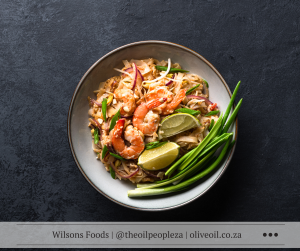
We’ve been making Pad Thai for years, and the secret to getting that authentic street-food flavour? It’s all in the oil. Once you try it with Wilson’s Coconut Flavoured Oil, you’ll understand why every Thai restaurant has that distinct taste you just can’t quite replicate at home with regular cooking oil.
This isn’t your average stir-fry. Pad Thai is all about balance — sweet, salty, sour, and that subtle coconut undertone that brings everything together. The beauty of this dish is that once you’ve got your ingredients prepped (which honestly only takes about 15 minutes), the actual cooking is lightning fast. We’re talking five minutes in the wok, tops.

Ingredients
Method
- Cook the rice noodles according to the packet instructions.
- Meanwhile, make the tamarind sauce. Coarsely grate the palm sugar into a bowl, add the tamarind paste, 1 tablespoon of fish sauce, a dash of vinegar and 2 tablespoons of boiling water and mix well so the sugar dissolves. Taste, and adjust the flavours if needed – you’re looking for sweet, sour and slightly salty.
- Halve, deseed and finely slice the chillies, then place in a bowl with the juice from 1 lime to make a quick pickle.
- Drain the noodles and toss in a little Wilson's Coconut Flavoured oil.
- Peel and roughly chop the shallots, then trim and finely slice the chives. Pick and roughly chop most of the basil and mint leaves.
- Slice the tofu into rough 1cm chunks. Run the tip of a knife down the back of each prawn and pull out the vein, meaning they’ll butterfly as they cook. Rinse the shrimps under cold running water, then pat dry with kitchen paper.
- Place a large wok on a medium heat with a splash of Wilson's Coconut Flavoured oil, then add the dried shrimps, peanuts and chilli flakes. Toss for 2 to 3 minutes, or until golden.
- Take the pan off the heat, transfer half the mixture to a pestle and mortar and lightly crush, keeping to one side. Return the pan to a medium-high heat with another splash of oil, adding the shallots to the mix. Fry for 2 minutes, or until turning golden.
- Toss in the prawns, chives, chopped herbs and shredded radish, then cook for a further 2 to 3 minutes, or until the prawns are almost cooked through.
- Beat and add the egg, cook for 1 to 2 minutes, then fold through and toss in the tofu, noodles, beansprouts and tamarind sauce until well combined.
- Divide the pad Thai between bowls, sprinkle over the crushed nut mixture from the mortar and pick over the remaining mint and basil leaves. Serve with the quick pickled chillies and lime wedges for squeezing over. Delicious!
Why We Use Wilson’s Coconut Flavoured Oil
Here’s the thing about authentic Pad Thai — the coconut flavour is meant to be subtle, not overpowering. That’s exactly what Wilson’s Coconut Flavoured Oil gives you. It adds that gentle, aromatic backdrop that makes you think “yes, this tastes like the real thing” without screaming coconut in every bite.
We’ve tried making this with regular vegetable oil, and honestly, something’s just missing. The coconut oil brings a richness and authenticity that transforms this from a good homemade stir-fry into proper Thai street food. Plus, it has a high smoke point, which means it can handle the fierce heat you need for a proper wok-tossed Pad Thai.
And here’s a little secret — once you’ve got a bottle in your pantry, you’ll start finding excuses to use it everywhere. Thai basil chicken? Check. Coconut rice? Absolutely. Even your morning scrambled eggs!
Our Tips
Get everything ready first — This is crucial. Pad Thai cooks so fast that you won’t have time to chop anything once you start. We call it “mise en place” in the kitchen, but really it just means getting your act together before you turn on the heat.
Don’t skip soaking the noodles — Your rice noodles need a good 30-minute soak in room temperature water before they hit the wok. They should be pliable but still firm. If they’re too soft, you’ll end up with mush.
Hot wok, cold oil — Get your wok absolutely smoking hot, then add the coconut oil. This is how you get that lovely “wok hei” or breath of the wok that makes restaurant stir-fries taste so good.
Protein first, vegetables after — Cook your prawns or chicken until just done, then set them aside. Add them back at the end. This way everything stays perfectly cooked and nothing gets rubbery.
Taste as you go — Pad Thai sauce should be balanced. If it’s too sweet, add more tamarind or lime. Too sour? A touch more sugar. Too salty? More lime juice. You’re the chef — trust your palate.
Fresh is best — Those garnishes aren’t just for decoration. The fresh bean sprouts, crushed peanuts, lime wedges, and coriander add texture and freshness that cut through the richness of the noodles. Don’t skip them.
How We Serve It
Traditionally, Pad Thai comes with a little plate of extras on the side: dried chilli flakes, extra peanuts, lime wedges, and sometimes fresh banana blossom if you can find it. We always put out these condiments so everyone can adjust their plate to their liking.
At home, we usually serve it straight from the wok onto individual plates while it’s still steaming hot. Sometimes we’ll do it family-style on a big platter with all the garnishes scattered over the top, especially when we’ve got friends over.
It’s brilliant on its own for a quick weeknight dinner, or you can serve it alongside Glenda’s Thai Green Curry and some crispy spring rolls for a proper Thai feast. We’ve also been known to pack leftovers (if there are any) into lunchboxes the next day — though it’s never quite as good as when it’s fresh from the wok.
More Ways to Use Coconut Flavoured Oil
Once you’ve got Wilson’s Coconut Flavoured Oil in your kitchen, you’ll wonder how you lived without it. Here are some of our other favourite ways to use it:
Glenda’s Thai Green Curry — Start your curry paste off in coconut oil for that authentic temple-kitchen flavour
Thai Basil Chicken Stir-Fry — Quick, fragrant, and weeknight-friendly. The coconut oil brings out the holy basil beautifully
Malaysian Nasi Lemak — Cook your rice in coconut oil with pandan leaves for that restaurant-quality fragrant rice
Tom Yum Soup — A little drizzle of coconut oil on top adds richness without overwhelming the citrus notes
Indonesian Rendang — Slow-cooked, deeply spiced beef curry that starts with coconut oil as the base
Coconut Rice — Simply cook your rice with a tablespoon of coconut oil for fluffy, fragrant grains that pair perfectly with any curry
The Good Stuff
Beyond tasting incredible, cooking with coconut flavoured oil means you’re using a high smoke point oil that’s perfect for high-heat cooking. It’s naturally dairy-free and vegan-friendly, making it ideal when you’re cooking for friends with different dietary needs. And unlike some flavoured oils that taste artificial, this one has a natural coconut essence that doesn’t overpower your dishes — it just makes them taste more authentic.
Ways to Change It Up
Vegetarian Pad Thai — Skip the prawns and use extra firm tofu instead. Press it well, cube it, and fry until golden before adding to the noodles.
Chicken Pad Thai — Thinly sliced chicken thigh works better than breast as it stays juicier. Marinate it briefly in a touch of soy sauce and coconut oil.
Extra Heat — Add fresh bird’s eye chillies when you’re cooking the aromatics, or stir through some sambal oelek with your sauce.
Prawn and Squid Combo — For a seafood feast, add cleaned squid rings along with the prawns. Just don’t overcook them — 60 seconds maximum.
Street-Style — Add dried shrimp and preserved radish (chai poh) for that authentic Bangkok street food experience. You can find both at Asian grocers.
Questions You Might Have
Can I use regular coconut oil instead of coconut flavoured oil?
You could, but the flavour will be much stronger and potentially overpowering. The coconut flavoured oil is specifically designed to give you that subtle taste without dominating the dish. If you only have regular coconut oil, use half the amount and mix it with a neutral oil.
What if I can’t find tamarind paste?
In a pinch, you can use a combination of lime juice and a tiny bit of brown sugar, though it won’t be quite the same. Tamarind has a unique sour-sweet flavour that’s hard to replicate. Most large supermarkets stock it these days, or you can order it online. It keeps forever in the fridge, so it’s worth having around.
Can I make this ahead of time?
Pad Thai is really best eaten straight from the wok. The noodles tend to stick together and lose their texture if you make it ahead. That said, you can prep all your ingredients in the morning and have everything ready to go. The actual cooking only takes five minutes, so it’s still quick enough for a weeknight.
My noodles always stick together. What am I doing wrong?
Two common issues: either your wok isn’t hot enough, or you’re not using enough oil. Make sure your wok is properly heated before adding the coconut oil, and don’t be shy with it. Also, keep everything moving constantly once the noodles go in. And remember — properly soaked noodles that are still slightly firm are much easier to work with than over-soaked mushy ones.
What type of noodles should I use?
Look for dried rice stick noodles, about 3-5mm wide. They’re sometimes labeled as “Pad Thai noodles” or “rice vermicelli” (though vermicelli is usually thinner). Avoid the really thin vermicelli or the super wide flat noodles — you want something right in the middle.
Is it supposed to be this sweet?
Authentic Pad Thai does have a noticeable sweetness, but it should be balanced with sour and salty notes. If yours tastes too sweet, add more tamarind paste or a good squeeze of lime juice. The beauty of cooking at home is you can adjust it to your taste.
Where do I get the coconut flavoured oil?
You can order it directly from us and we’ll deliver it to you. It comes in 250ml bottles, perfect for keeping in your pantry for whenever the Thai food craving strikes.
Ready to Make This?
Grab a bottle of our coconut flavoured oil and you’re halfway to Bangkok.