
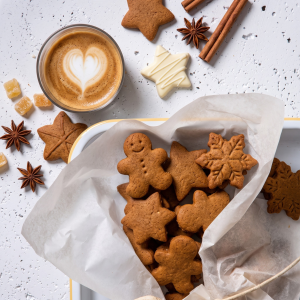
The first Saturday of December tends to end with flour up to someone’s elbows and a butter knife standing in for the good cutters, which have gone missing again. Stars and gingerbread men get cut from the dough while the radio plays, and nobody mentions the scraps disappearing before they reach the tray.
The dough is made with Wilson’s Extra Virgin Olive Oil instead of butter — originally out of necessity more than anything else, but it’s stuck for good reason since. It comes together softer, holds its shape when cut, and keeps the biscuits tender for days instead of turning them into rusks.
This is the recipe that grew out of that afternoon. Spiced, soft in the middle, sturdy enough to decorate and give away. Here’s how we make it.
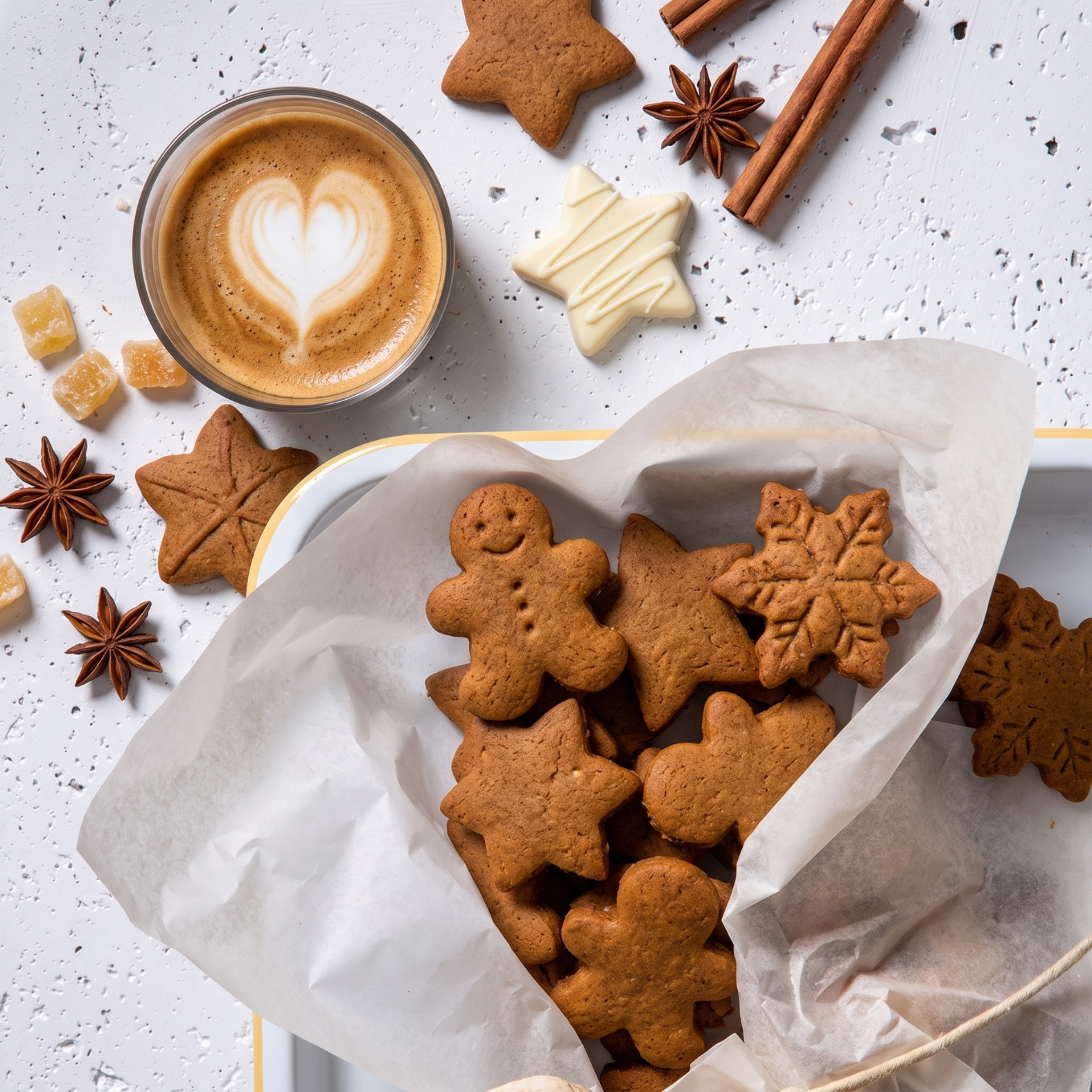
Soft Gingerbread Cookies with Extra Virgin Olive Oil
Ingredients
Method
- In a large bowl, whisk together the flour, ginger, cinnamon, cloves, bicarbonate of soda and salt.
- In a separate bowl, whisk the Wilson's Extra Virgin Olive Oil, brown sugar and golden syrup together until smooth.
- Whisk in the egg and vanilla essence until fully combined.
- Pour the wet mixture into the dry ingredients and stir with a wooden spoon until a soft dough forms.
- Turn the dough out, shape into a disc, wrap in cling film and chill in the fridge for at least 1 hour, or until firm enough to roll.
- Preheat the oven to 180°C and line two baking trays with baking paper.
- On a lightly floured surface, roll the dough out to an even 5mm thickness.
- Cut out shapes with your chosen cutters and place them on the prepared trays, spacing them 2cm apart.
- Chill the cut shapes on the trays for 10 minutes to help them hold their edges in the oven.
- Bake for 9-10 minutes, until the edges are set but the centres still look slightly soft.
- Leave the biscuits to cool on the tray for 5 minutes, then transfer to a wire rack to cool completely.
- For the icing, whisk the icing sugar with the water or lemon juice until smooth, adding liquid a teaspoon at a time until you reach your desired consistency.
- Divide and colour the icing as needed, then pipe or spread onto the completely cooled biscuits.
- Leave the icing to set fully, at least 2 hours, before stacking or storing.
Notes
We Use Wilson’s Extra Virgin Olive Oil
Butter sets hard when it cools, which is what gives traditional gingerbread its snap. Wilson’s Extra Virgin Olive Oil stays liquid at room temperature, so the dough it builds never fully firms up in the same way. What you get instead is a biscuit that’s crisp at the edge and properly soft in the middle, even a few days after baking.
The oil also carries the spice differently to butter. Ginger, cinnamon and cloves are fat-soluble, so they bloom into the oil as the dough rests and spread more evenly through every bite, rather than sitting in pockets the way they can in a butter-based dough.
There’s no dairy to melt or soften either, so the dough goes together in one bowl, no waiting for anything to come up to room temperature first.
Our Tips
Chill the dough properly — an hour in the fridge stops it sticking to the rolling pin and keeps your shapes crisp once baked.
Roll to an even 5mm — any thinner and the biscuits turn brittle, any thicker and the middle stays doughy past the edges.
Use fresh ground spice — ginger and cinnamon lose their punch after a year in the cupboard, so give yours a sniff before you measure.
Get the icing consistency right — thick enough to hold a line for piping, loose enough to spread smooth for flooding.
Store soft and crisp biscuits separately — keeping them in the same tin softens the crisp ones within a day.
Let the icing set fully before stacking — give decorated biscuits at least two hours uncovered before you box them.
How We Serve It
These land on the table stacked on a plate next to the rusks and koeksisters at a December family gathering, close enough to the tree that someone always takes one before lunch is even called. They hold up well next to a cup of rooibos in the afternoon heat, which is more than you can say for most festive baking in a Cape Town summer.
They travel well too, wrapped in brown paper and tied with string for teachers, neighbours and the aunty who always brings something home-baked to every gathering and expects the same in return. A tin of these, still slightly soft, tends to disappear before the school holidays are even over.
For a gift, stack them in a clear cellophane bag with a sprig of rosemary from the garden tucked in — it looks festive and costs nothing extra.
More Ways to Use Wilson’s Extra Virgin Olive Oil
Once the bottle’s open for gingerbread, it doesn’t need to go back in the cupboard. Wilson’s Extra Virgin Olive Oil earns its keep well past baking day.
4 Showstopping Doughnuts — another festive bake for when the mood hasn’t run out yet.
Three Flavour Focaccia — bread for the table alongside the cheese board on Christmas Eve.
A Mother’s Day Lunch — a full menu for the next family lunch on the calendar.
Cheesy Onion Soup — something warm for the cooler evenings once the decorations come down.
Steak & Onion Sandwich — a good way to use up the festive leftovers.
The Good Stuff
Wilson’s Extra Virgin Olive Oil is Halaal and Kosher certified, and it’s suitable for vegan and vegetarian diets, so it fits a dough that already has no butter in it. That makes this gingerbread easy to bake for a table with different dietary needs, without changing anything about the recipe itself.
Stored in a cool, dark place, it holds a two-year shelf life, so the bottle you open for this batch will still be good for whatever you bake next.
Ways to Change It Up
For a royal icing finish — pipe fine outlines and flood the centres for a glossier, more formal look.
For a rustic finish — skip the piping bag and just drizzle icing off a spoon.
For different shapes — swap the gingerbread men for stars, trees or even a Protea cutter for something a little more local.
For more heat — add an extra half teaspoon of ground ginger and a pinch of black pepper for a sharper bite.
For a gluten-free version — swap the cake flour for a 1:1 gluten-free baking blend; the dough will feel slightly more delicate to roll.
For gifting — layer the biscuits between sheets of baking paper in a glass jar and tie a ribbon around the lid.
Questions You Might Have
My dough feels too sticky to roll. What went wrong?
It usually just needs more time in the fridge. If it’s still sticky after an hour, dust your work surface and rolling pin generously with flour rather than adding more flour to the dough itself.
How long do the biscuits keep?
Kept in an airtight tin, undecorated biscuits stay soft for about a week. Once iced, they’re best within four to five days.
Can I freeze the dough or the baked biscuits?
Both freeze well. Wrap the raw dough in cling film for up to three months, or freeze the baked, undecorated biscuits in a sealed container for up to two months. Thaw fully before icing.
Can I use less oil than the recipe calls for?
We wouldn’t recommend it. The oil is what keeps the dough soft and holds the spices together, so cutting it back will leave you with a drier, more crumbly biscuit.
What’s the best icing for decorating with kids?
A simple icing sugar and water mix is easiest for small hands. Keep it slightly thick so it doesn’t run off the edges before it sets.
Why did my biscuits spread out of shape in the oven?
The dough likely wasn’t cold enough when it went in. Chilling the cut shapes on the tray for ten minutes before baking helps them hold their edges.
Where can I buy Wilson’s Extra Virgin Olive Oil?
It’s available to order directly from oliveoil.co.za and at leading retailers across South Africa.
Ready to Make This?
Get the bottle that swaps in for butter this festive season.
Shop Now More RecipesMore From Our Kitchen
4 Showstopping Doughnuts — Three Flavour Focaccia — Bulletproof Coffee — All Recipes
Made this? We’d love to see
Tag us @theoilpeopleza · #WilsonsFoods